No formal canon. Followers across many nations called him "our father". Mooney reports that distant tribes believed him omniscient. Yerington Paiute informants quoted by Hittman spoke of him as a man of real power (booha).
He was interviewed in life by an army scout in 1890 and by Mooney in 1892, and his message survives in a text dictated to an Arapaho delegate. Later wonders rest on one late memoir.
Agency letters of 1889 to 1890 and Chapman's report of December 1890 (written 42 years before their death)
Paper trail
Where they came from
Smith Valley or Mason Valley, Lyon County, Nevada, USA (disputed)
Mason Valley; he told Mooney he had never left it, though later reports have him travelling
Paiute Cemetery, Schurz, Walker River Reservation, Nevada. We could not confirm how often it is visited.
Son of Tävibo, a dreamer and petty chief by Wovoka's account. Northern Paiute farm labourers. He worked for the rancher David Wilson and married young.
No recorded teacher beyond his father. Exposure to Christian teaching in the Wilson household. Followers point to the vision of the eclipse.
Loss of land and game, fever, the drought of 1888, and the mass deaths and conquest suffered by the Plains nations who took up the dance.
Paiute neighbours first, after weather predictions and trances. Letters and delegates carried his name east from 1889, and by 1890 newspapers and the War Department were looking for him.
Life
Wovoka grew up in the Walker River country of western Nevada, a member of the people who call themselves Numu. His father, Tävibo, was a dreamer whom Wovoka described to James Mooney as a petty chief and not a preacher. Mooney could not settle whether Tävibo was the prophet of the Ghost Dance of about 1870. After his father's death Wovoka worked for the rancher David Wilson, whose family gave him the name Jack Wilson and from whom he took some English and some Christian teaching.
During an eclipse, most likely that of 1 January 1889, and while ill with a fever by a neighbouring rancher's account, he went into a trance and reported being taken to God. He brought back a dance and a moral teaching: be good, do not fight, do not lie or steal, work, and live in peace with the whites. Delegates came from the Plains nations in 1889 to 1891 and carried the dance east, where it changed as it travelled.
Among the Lakota the movement met starvation and army pressure, and the US Army's massacre at Wounded Knee followed in December 1890. Wovoka told Mooney that he had nothing to do with the ghost shirt and that his teaching was peace. He received letters from Plains believers for years after, and he went on working as a healer and ranch labourer. He died at Yerington in 1932 and is buried at Schurz.
You must not fight. Do no harm to anyone. Do right always.
Do not tell the white people about this. Jesus is now upon the earth. He appears like a cloud.
Images
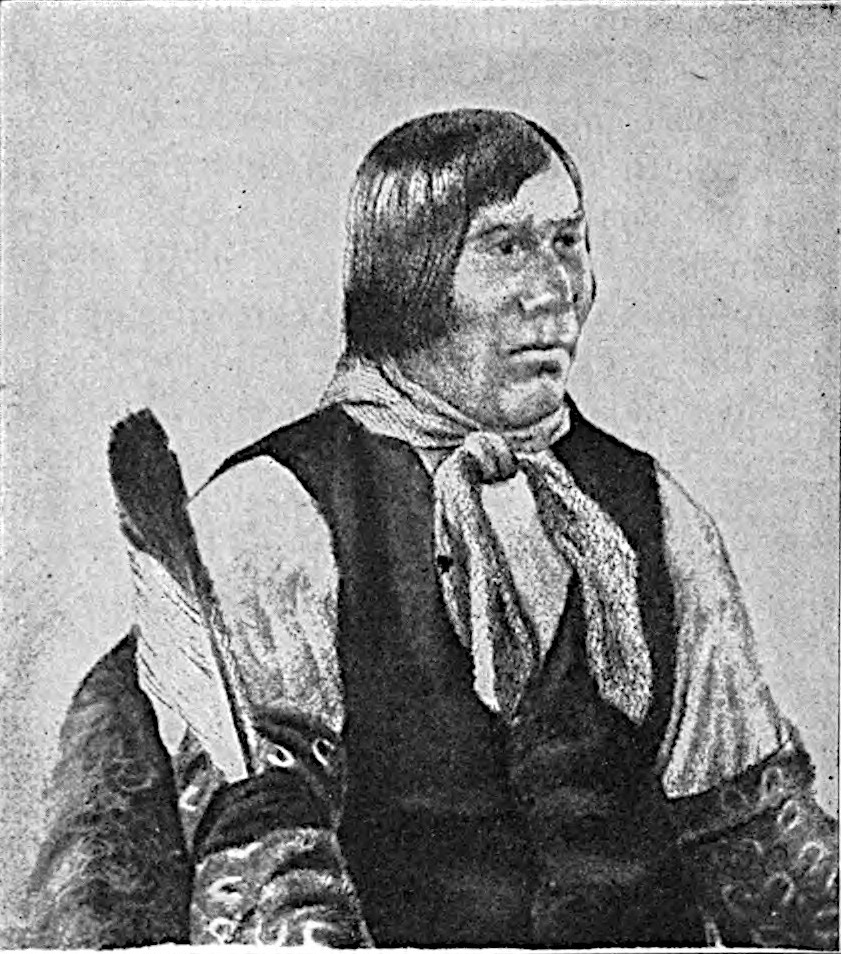
Use image 1 for print. Image 2 has no stated source, so commercialOk is false.
Reported events
The vision when the sun died
Wovoka said that when the sun died he fell asleep by day, was taken to the other world, saw God and the long dead happy and young, and was sent back with a dance and a moral message.
When the sun died, I went up to heaven and saw God and all the people who had died a long time ago.
Reported by Wovoka himself to James Mooney through the interpreter Ed Dyer, 1 January 1892; earlier to the army scout Arthur Chapman, December 1890; the Paiute Josephus to Chapman.. Recorded December 1890 (Chapman); Mooney published 1896..
That Wovoka claimed this is well attested by two independent interviewers, and the eclipse of 1 January 1889 is an astronomical fact that fits his chronology. Mooney's rancher informant reported fever at the time, and Mooney offered delirium plus catalepsy as his explanation. Josephus told a different version, a noise on the mountain while cutting wood, and Wovoka gave Chapman and Mooney different dates. The experience itself cannot be checked.
Event scored: the vision as an experience. Two interviewers recorded it within about two years, and the eclipse fits, though versions differ on detail. Reviewer's judgment, not a calculation.
Sources: The Ghost-Dance Religion and the Sioux Outbreak of 1890; The 1890 Ghost Dance in Nevada
Control of rain and snow
Wovoka claimed God gave him control of the elements. Josephus, Walker River police captain, said Wovoka promised rain within three days during drought and that it came; Wovoka's uncle told Mooney the deep snow of January 1892 was his doing.
he claims that he alone is responsible for the storms of this season and they all firmly believe it
due in this instance, as Charley assured us, to the direct agency of Jack Wilson
Reported by James Josephus to Chapman, 1890; Charley Sheep to Mooney, 1892; a letter to agent S. S. Sears quoted by Hittman.. Recorded 1889 to 1892..
Hittman shows from Nevada newspapers that a severe drought in 1888 gave way to heavy storms in 1889, so the belief rests on real weather. There is no record of how often predictions failed. Mooney records that Wovoka had five weather songs, and that he once offered to supply rain to the government for a small stipend, a proposal reported by J. O. Gregory and never sent.
Scored is rain that came on his word, which believers attest. The drought really ended, but there is no record of misses. Reviewer's judgment, not a calculation.
Sources: The Ghost-Dance Religion and the Sioux Outbreak of 1890; The 1890 Ghost Dance in Nevada
The block of ice from the summer sky
On a hot July day by the river, before a hundred or more Paiute, a block of ice appeared on a blanket beside Wovoka. Those present treated it as a wonder, drank the meltwater ceremonially and bathed.
a big block of ice some 25 or 30 pounds in weight
Reported by Ed Dyer, Mason Valley storekeeper, Paiute speaker and later Wovoka's letter writer, who says he and his brother were there.. Recorded Dyer wrote his memoir at about 86, many decades later..
Dyer did not see the ice arrive; he heard an outcry and ran over. He doubted the event. Hittman reports Paul Bailey's view that the Wilson boys played a prank, and Genevieve Chapin's that Wovoka himself did it as a joke. Paiute descendants told Hittman they saw no reason he could not have done it with his power. The date is uncertain; one anonymous manuscript gives the Fourth of July. The 60-year gap in scoring is an estimate.
A block of ice was probably there. Dyer did not see it arrive, writes about sixty years on, and doubted it, and pranks are the proposed explanations. Reviewer's judgment, not a calculation.
Sources: The 1890 Ghost Dance in Nevada
Bullet-proof in front of a crowd
Dyer describes Wovoka loading a shotgun with dust and sand, having his brother fire at him, then standing unhurt in a shirt full of holes with the shot lying on the blanket.
That was only a joke.
Reported by Ed Dyer, eyewitness by his own account; a Wilson family member to Grace Dangberg; the scout Chapman, who put the story to Wovoka.. Recorded Chapman, December 1890; Dyer decades later..
When Chapman asked about this in 1890, Wovoka himself dismissed it, and that reply is the earliest evidence. A Wilson family member told Dangberg that Wovoka let himself be shot at with buckshot and then declined a later offer. Mooney calls Wovoka an expert sleight-of-hand performer. Hittman notes that invulnerability was a known element of Great Basin shamanic power. The idea matters historically because of the ghost shirts, which Wovoka disclaimed.
A demonstration may well have been staged, and the 1890 report is early. Scored is being unhurt by a real charge, which Wovoka himself called a joke, and Mooney calls him expert in sleight of hand. Reviewer's judgment, not a calculation.
Sources: The 1890 Ghost Dance in Nevada; The Ghost-Dance Religion and the Sioux Outbreak of 1890
The whole world in a hat
Before Cheyenne and Arapaho delegates in 1891, Wovoka passed eagle feathers over his hat. The Cheyenne Tall Bull saw him draw out "something black". The Arapaho Black Coyote looked in and said he saw the whole world.
there “saw the whole world.”
drawn out from it “something black.”
Reported by Tall Bull and Black Coyote, both delegates, separately to James Mooney.. Recorded Told to Mooney in early 1892; printed 1896..
This is a rare case of two named eyewitnesses to one event who disagree, recorded by the same interviewer within a year. Mooney believed both were honest and put the difference down to the temper of the two men, calling it hypnotic. It shows how much of a reported wonder can depend on the observer.
Two named eyewitnesses told the same interviewer within a year and disagree on what they saw. The rite with the hat is solid; 'the whole world' is one man's experience. Reviewer's judgment, not a calculation.
Sources: The Ghost-Dance Religion and the Sioux Outbreak of 1890
Disputes
- Mooney wrote that Wovoka occasionally 'resorts to cheap trickery' to keep up his reputation, while judging him honest in his belief.
- George Plummer, David Wilson's son-in-law, told Jeanne Wier about 1910 that Wovoka once said to Mrs Wilson that there was nothing in it and that he got money from Indians. This is second-hand family testimony reported by Hittman, and it conflicts with Paiute memory.
- The letter to agent Sears says a crowd took up about $25 for him, and Hittman notes that Chapman ascribed money motives. Dyer told of letters from Plains believers seeking his help.
- Mooney and the newspapers disagreed sharply. Some press described him as a war prophet. Mooney's interviews show a message of peace, though the letter's phrase 'until you leave them' has been read as a hope that white rule would end.
- Outside accounts describe him as a fake or a messiah; the Numu account in Hittman's fieldwork describes a person with booha, a recognised kind of power, and is not well captured by either word. Mooney says he never claimed to be Christ.
Still unknown
- Where the original Messiah Letter sheet given to Mooney is now held. It should be sought at the National Anthropological Archives.
- His exact birth year and birthplace: Mooney's figures imply about 1856, others say 1858 and Smith or Mason Valley.
- Whether Tävibo was the prophet of the 1870 Ghost Dance, which Mooney doubted and later scholars dispute.
- What the Walker River census rolls say of him; We did not view them.
Records
Sources
primary
scholarly
reference