Founder of the Warsi tradition. His shrine at Dewa draws Muslims and Hindus, and the fair there is an official event in the district.
Thin. His life rests on a disciple's biography written soon after his death, with very little independent record. The gazetteers confirm only the fair and his later fame.
Hayat-i-Warsi by Mirza Ibrahim Baig Shaida, date not verified; the 1904 gazetteer's Haji Sahib may refer to him
Paper trail
Where they came from
Dewa, Barabanki district, Uttar Pradesh, India (traditional)
Dewa and travel through northern India; journeys abroad claimed by biographers
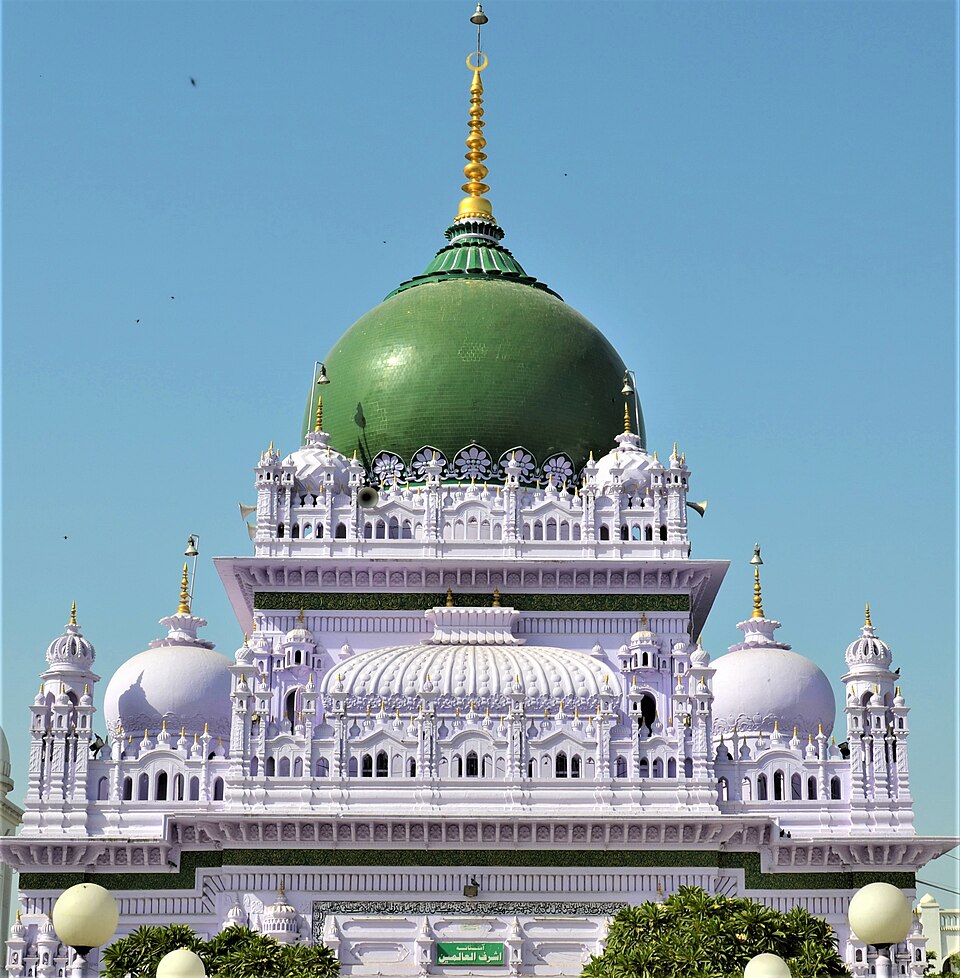
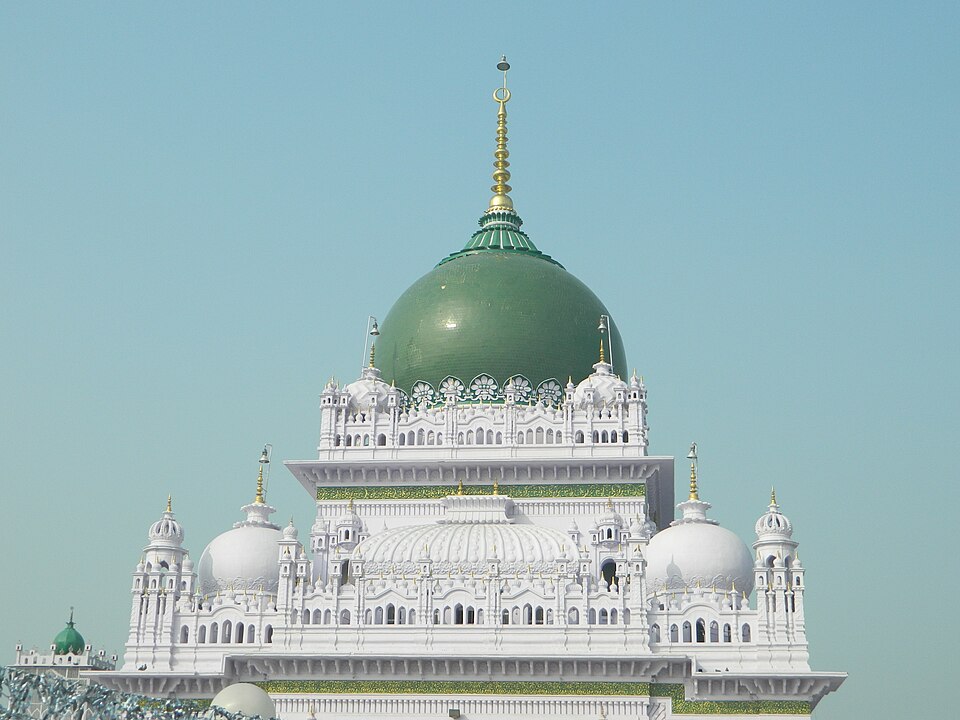
Dargah at Dewa Sharif, Barabanki; a white domed shrine with a large annual fair, still heavily visited by Muslims and Hindus
Sayyid family claiming descent from Imam Husain. Father Qurban Ali Shah, mother Sakina (called Chandan Bibi) per Hayat-e-Waris. Orphaned young, per the tradition. Only hagiography gives these details.
Memorized the Quran as a child, by hagiographic report. Received initiation from his guardian Khadim Ali Shah. Hajj and long wandering are given as the turning point.
Orphaned in infancy (hagiography). He lived through the British annexation of Awadh in 1856 and the 1857 uprising, but the biography consulted is nearly silent on these.
Disciples among taluqdars, lawyers and officials spread his fame, along with biography and card photographs. Hayat-e-Waris describes a devotee carrying a card-size photograph of him.
Life
Waris Ali Shah was born at Dewa in Awadh to a Sayyid family. His father was Qurban Ali Shah. The Hayat-i-Warsi tradition says he lost his parents at about three, was raised by a relative, and took on spiritual succession from his guardian Khadim Ali Shah while still a boy.
He travelled widely. His biographers count many pilgrimages to Mecca, and speak of journeys through Iraq, Iran, Turkey and Europe, including a meeting with an Ottoman sultan. The 1964 government gazetteer repeats a shorter list of Arabia, Syria, Palestine, Mesopotamia, Persia and Turkey. None of this has been confirmed from travel records.
He stayed celibate and left no heirs, and his followers wear yellow, according to the 1964 gazetteer. His biographers say he initiated Hindus and Christians. Followers came from the landed class of Awadh and the educated colonial elite, among them lawyers and judges. A Hindu thakur, Pancham Singh, and Raja Udit Narain Singh are named among the donors to his shrine.
He died at Dewa in April 1905, attended by his physician Hakim Mirza Yaqub Beg. A trust and committee, not a family, runs the shrine. Claudia Liebeskind's thesis abstract describes a tradition routinized through a committee as a product of the colonial setting, which appears to mean Dewa.
Images
Card photographs of him from life circulated among devotees, per Hayat-e-Waris, but no copy with a confirmed free licence was found.
Reported events
The becalmed ship
On his first voyage to Arabia, his biography says, he was fasting and unnoticed when the ship stopped. A Bombay merchant, Muhammad Zia-ud-din, dreamed that the Prophet rebuked him for eating without thought of fellow passengers, found Waris in a dark corner, and fed him. The ship then moved.
suddenly the ship lost its propulsive motion and was becalmed
Reported by Mirza Ibrahim Baig Shaida, disciple and biographer, in Hayat-i-Warsi, in the English version consulted. Recorded Biography written after 1905, on an event decades earlier.
No voyage record was found. Sailing ships are often becalmed, and the story has a familiar hagiographic shape. The merchant's testimony comes through the biographer alone.
A merchant's dream told only by a biographer, decades later, with no voyage record. A calm at sea is ordinary, so the low score reflects the record. Reviewer's judgment, not a calculation.
Sources: Hayat-e-Waris: An English Version of the Life of the Illustrious Saint of Deva Shareef
Fragrance of his body and untouched feet
Devotees reported a pleasant scent from his body, and said that the soles of his feet stayed soft and clean despite long barefoot travel.
Reported by Devotees collectively, in Hayat-i-Warsi. Recorded After 1905, though it speaks of what devotees noticed in his lifetime.
The same features are common in saints' lives across traditions. The text calls it unanimous among devotees and names no outside witness. Perfume and bathing by attendants are also described in the same book.
Devotees collectively, with no one named, and the same book describes perfumes and bathing. Compare the violets at San Giovanni, which at least sit in a formal file. Reviewer's judgment, not a calculation.
Sources: Hayat-e-Waris: An English Version of the Life of the Illustrious Saint of Deva Shareef
The Englishman's dream of Christ
At Bara Banki station, the biography says, a high-ranking Englishman stared at him and later returned, saying he had dreamed of Christ a year earlier, on 27 December, in the same clothing and features. A named judge, Sharaf-ud-Din, was present.
Reported by Syed Sharaf-ud-Din Warsi, a barrister and judge and a disciple, as told in Hayat-i-Warsi. Recorded After 1905.
The informant is identified and of standing, which is unusual for this text, but he was a devotee. The Englishman is unnamed, so nothing can be checked. The Calcutta High Court records of Sharaf-ud-Din's career would at least date him.
A named informant of standing, but a devotee, and the Englishman is unnamed. The meeting is ordinary and could have grown in memory. Reviewer's judgment, not a calculation.
Sources: Hayat-e-Waris: An English Version of the Life of the Illustrious Saint of Deva Shareef
Count Galarza's experience of his death
A European disciple called Count Galarza wrote from Paris on 13 May 1905 that he saw the saint going to the other world and was united with him at the moment of death. Later letters are dated 8 September and October 1905.
Reported by Count Galarza, in letters to Haji Aughat Shah and to the biographer, printed in Hayat-i-Warsi. Recorded 1905, by the letters' own dates.
If the letters are genuine this is the closest thing to dated testimony on this page, recorded within weeks. The originals were not seen, and the Count's identity was not established. His letter arrived after news of the death could have reached Paris.
Event scored: Galarza's experience, as an experience. The letters are dated within weeks if genuine, but originals were not seen, his identity is unestablished, and news could have reached Paris first. Reviewer's judgment, not a calculation.
Sources: Hayat-e-Waris: An English Version of the Life of the Illustrious Saint of Deva Shareef
Disputes
- Claims that he met Bismarck in Berlin and Queen Victoria, or that Sultan Abdul Hamid II was his disciple, rest on modern secondary works. Hayat-e-Waris itself names Sultan Abdulmejid, a different ruler. None was confirmed from any state record.
- Claims that Sai Baba of Shirdi was among his disciples come from modern writing and are not confirmed.
- Reports of his number of followers, including 400,000, rest on interviews and secondary accounts in Rahmatullah's article, not on documents.
- His date of death varies between 5, 6 and 7 April 1905, and his birth year between 1817 and 1819. Hayat-e-Waris gives 4:13 a.m. and burial on Friday 6 April.
- A case in All India Reporter and Indian Cases (both 1917) is cited on Wikipedia in connection with him. It was not found, and it may concern his shrine or followers.
Still unknown
- Nevill's Bara Banki gazetteer of 1904 lists a fair of Haji Sahib at Dewa with 25,000 people but does not name Waris Ali Shah in the text consulted. Whether it means him or his father is not clear. The scan's OCR is rough.
- The original Urdu Hayat-i-Warsi was not read, and its first publication date was not verified. The English version consulted has no named translator.
- Liebeskind's thesis and book are the key scholarship, but the SOAS site could not be reached. The Religions of South Asia article of 2015 was paywalled.
- The National Archives of India and Uttar Pradesh State Archives (Lucknow) may hold police or intelligence notes on Dewa. The Pioneer and Oudh Akhbar of April 1905 would give a dated death notice.
- Passenger or Ottoman records for any of his journeys.
Records
Sources
contemporary
hagiography
scholarly
reference