Founder of Babism. Baha'is revere him as an independent Manifestation of God and the herald of Baha'u'llah; his title, the Bab, means the Gate. To Shi'i clerics of his day he was a heretic.
He left a large body of his own writings, and diplomats, a physician and missionaries recorded him during his lifetime. The miraculous details rest on weaker, later testimony than the bare facts of his imprisonment and death.
The Bab's own writings from 1844, including the Qayyumu'l-Asma (written 6 years before their death)
Paper trail
Where they came from
Shiraz, Iran (documented)
Shiraz and Bushehr, then Isfahan, and as a prisoner at Maku, Chihriq and Tabriz in Azerbaijan
Shrine of the Bab, Mount Carmel, Haifa, Israel, according to Baha'i histories; a major Baha'i pilgrimage site. Contemporary officials reported the body eaten by dogs at Tabriz
Sayyids of Shiraz, mostly merchants in Shiraz and Bushehr. Father Sayyid Riza, a cloth merchant, died early. Raised by maternal uncle Haji Mirza Sayyid 'Ali, later a disciple. Few direct links with the clergy, though several relatives followed the Shaykhi school.
Local schooling for six or seven years, then trade and private religious study. About a year in Karbala near Sayyid Kazim Rashti. Followers point to his declaration to Mulla Husayn in 1844; MacEoin dates his first visionary experiences to 1843 and May 1844 from his own writings.
Early death of his father, loss of his only child, and the leadership vacuum in the Shaykhi school after Sayyid Kazim Rashti died. Imprisonment from 1847.
First by young Shaykhi students, starting with Mulla Husayn Bushru'i in 1844, who spread the claim through Iran and Iraq. Crowd enthusiasm is documented by American missionaries at Urumiyyih in 1848. Baha'i recognition of him as a Manifestation came through Baha'u'llah.
Life
Sayyid 'Ali Muhammad was born in Shiraz in 1819 to a family of merchant sayyids, descendants of the Prophet. His father died while he was young, and accounts conflict on when, and a maternal uncle raised him. After six or seven years of schooling he entered the family trade, and spent about five years in Bushehr. He spent a year around 1840 in Iraq, attending the classes of the Shaykhi leader Sayyid Kazim Rashti in Karbala. He married Khadija in 1842; their one child died in infancy or at birth.
In May 1844, after dreams and visions, he began the Qayyumu'l-Asma, a commentary on the sura of Joseph, and accepted the Shaykhi Mulla Husayn Bushru'i as his first disciple. His claims rose over time. In the Vakil mosque in Shiraz he publicly denied being the gate of the Imam, and from Maku around 1848 he proclaimed himself the Mahdi and declared the laws of Islam abrogated.
He was held at Maku and then Chihriq from 1847. In summer 1848 he was examined at Tabriz before the Crown Prince Nasiru'd-Din and leading clerics, beaten on the feet, and examined by Dr William Cormick for sanity. After Babi risings at Shaykh Tabarsi, Nayriz and Zanjan, the chief minister Mirza Taqi Khan ordered his death, and in July 1850 he was shot in the barracks square at Tabriz with a follower, Muhammad-'Ali Zunuzi. Sheil protested that the bodies had been thrown to dogs, which is what early Western sources believed. Baha'i histories say followers recovered the remains, and these now lie on Mount Carmel.
Babis, the community he founded, were massacred in large numbers, and most later became Baha'is under Baha'u'llah, while a minority followed Subh-i Azal. He remains unusually well documented for a founder, because diplomats recorded his last years as they happened.
He was a very mild and delicate looking man, rather small in stature and very fair for a Persian, with a melodious soft voice, which struck me much.
Most assuredly the Musulman fanaticism does not exist in his religion, as applied to Christians, nor is there that restraint of females that now exists.
This servant has absolutely no knowledge connected with any [superhuman] claim.
His death, according to the belief of his disciples will make no difference, as Bab must always exist.
Images
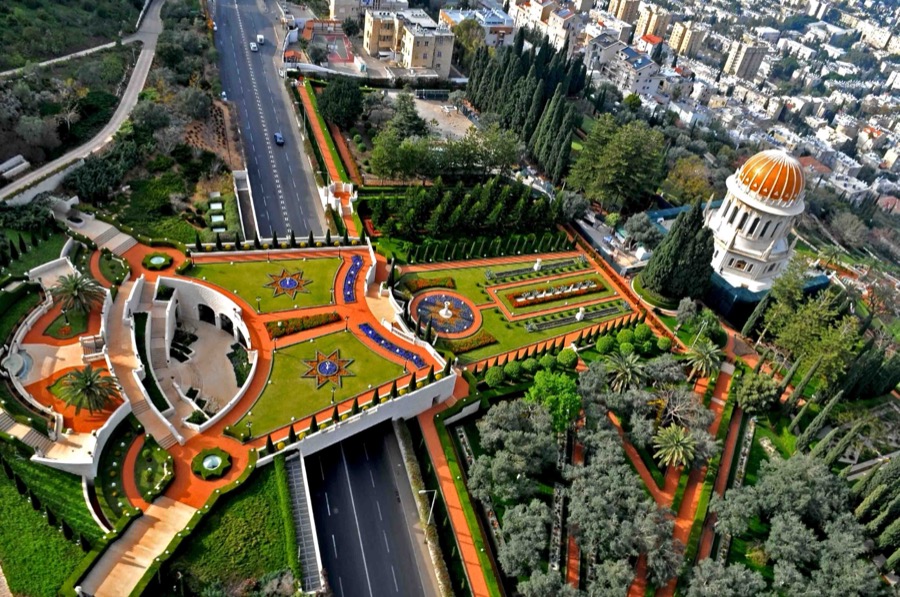
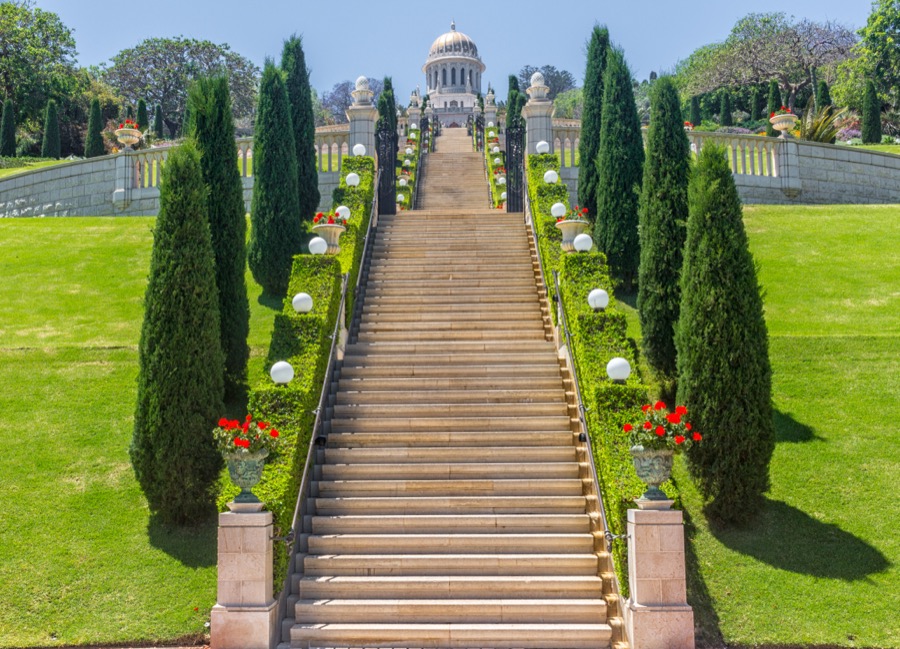
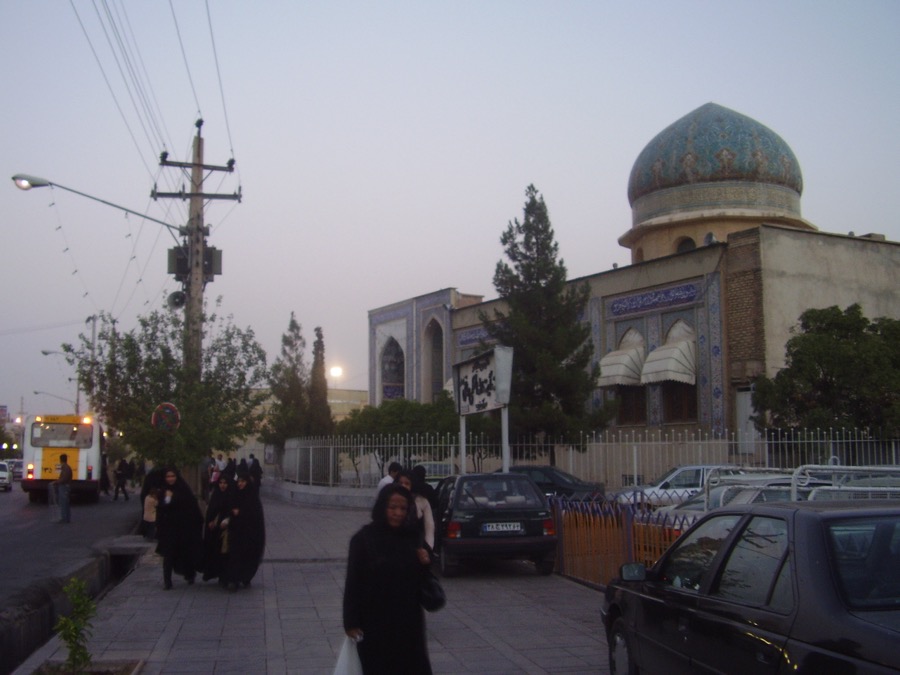
No portrait is used. Baha'is treat images of the Bab with great reverence and do not display them casually, so no likeness has been saved, here or in the records. The card uses his shrine and the site of his house. No free image of a manuscript in his hand was found on Wikimedia Commons; Browne's 1918 facsimiles of the disputed Tabriz documents are in the records folder.
Reported events
The failed first volley
At the execution in Tabriz in July 1850, a first volley reportedly left the Bab unhurt with his ropes cut, and he was out of sight when the smoke cleared. He was found and a second volley killed him. Baha'i sources add that he was found back in his cell finishing a conversation with his secretary, and that his companion stood unhurt.
When the smoke and dust cleared away after the volley, Bab was not to be seen, and the populace proclaimed that he had ascended to the skies.
The balls had broken the ropes by which he was bound, but he was dragged from the recess where after some search, he was discovered, and shot.
To neither one of them had the slightest injury resulted.
Reported by Sir Justin Sheil, British Minister, from unnamed informants in 1850; a Persian who told W. S. Blunt in 1881 that he saw it as a boy; A Traveller's Narrative (1886 text); Nabil, a Babi and Baha'i historian writing in 1887-1888 from survivors.. Recorded 22 July 1850 (Sheil), about two weeks after the event.
The core sequence, a failed volley followed by a second, is reported by a non-Baha'i diplomat within two weeks, so it is not a late invention of the community. But Sheil was hundreds of miles away and his source is unknown. Anitchkov, the Russian consul in Tabriz, says only that the soldiers botched the shooting and made it a torture, and Stevens mentions no failure, although he was also absent. Details conflict: Blunt's informant has the companions killed by the first volley, Nabil has the companion unharmed, Sheil says the Bab was dragged from a recess, Nabil says he sat calmly in his room, and the guide quoted by Tweedy says he had fallen and escaped into the crowd. Nabil's figure of 750 rifles appears in the late Baha'i account, not in any 1850 dispatch. No sworn or official Persian record of the shooting was seen here. Baha'is call the event miraculous; Sheil himself gives the natural reading that bullets broke the ropes.
A neutral diplomat reported a failed first volley within two weeks, though at a distance and from unnamed informants. Scored is the failed volley and his being found alive; the conversation in the cell and the 750 rifles belong only to late Baha'i accounts. Reviewer's judgment, not a calculation.
Sources: Sheil to Palmerston, No. 88, 22 July 1850; R. Stevens to Sheil, No. 68, 24 July 1850; Anitchkov to the Russian Foreign Ministry, No. 437, 3/15 July 1850; The Babi and Baha'i Religions, 1844-1944: Some Contemporary Western Accounts; A Traveller's Narrative Written to Illustrate the Episode of the Bab, vol. 2, with Browne's notes; The Dawn-Breakers: Nabil's Narrative of the Early Days of the Baha'i Revelation; Execution of the Bab
Dust storm after the execution
Nabil writes that as the final volley was fired a gale rose and a whirlwind of dust darkened Tabriz from noon until night.
Reported by Nabil-i-A'zam, Baha'i historian, not present in Tabriz that day. Recorded 1887-1888, about 38 years later.
Not found in the British, Russian or French dispatches printed by Momen. Sheil, Stevens, Anitchkov and Ferrier do not mention it. A dust storm in a Persian summer would be ordinary in itself; what cannot be confirmed is that it happened that day and lasted until night. Weather records for Tabriz in 1850 were not found.
A dust storm is ordinary, but only a late narrative reports this one, and no dispatch from 1850 mentions it. Scored is a storm that day lasting until night. Reviewer's judgment, not a calculation.
Sources: The Dawn-Breakers: Nabil's Narrative of the Early Days of the Baha'i Revelation; The Babi and Baha'i Religions, 1844-1944: Some Contemporary Western Accounts
Fate of the regiment that shot him
Nabil presents the fate of the second firing regiment as a judgement: 250 men killed when a wall fell in an earthquake that same year, and the remaining 500 shot after a mutiny three years later.
This afternoon a cruel massacre of the soldiers of the Nasarieh Regiment took place here.
Reported by Nabil-i-A'zam, Baha'i historian; a separate British consular report on the mutiny. Recorded British report 28 May 1855; Nabil 1887-1888.
A British dispatch does confirm a real massacre of the Nasiriyyih regiment outside Tabriz in May 1855, after a mutiny over pay, with Consul Keith Abbott estimating 300 to 400 killed and wounded. That is about five years after the execution, not three, and Abbott names the Qa'im-Maqam, not Nabil's Mirza Sadiq Khan-i-Nuri. Abbott says nothing of the Bab, and Momen notes the commanding officer was not the man of 1850. The wall collapse was not found in any independent record. The link between the two events is an interpretation by believers, not a finding.
A British dispatch confirms a massacre of the regiment in 1855, which is solid. Scored is Nabil's account: the wall collapse is unconfirmed, and the date, numbers and official all differ. Reviewer's judgment, not a calculation.
Sources: The Dawn-Breakers: Nabil's Narrative of the Early Days of the Baha'i Revelation; The Babi and Baha'i Religions, 1844-1944: Some Contemporary Western Accounts
Reports of miracles and holy bathwater at Urumiyyih
American missionaries at Urumiyyih recorded that people said the Bab worked miracles, that crowds wept on visiting him, and that bystanders carried off the water he had bathed in.
Reported by Dr Austin H. Wright and Rev. J. H. Shedd, American missionaries in Urumiyyih, and Rev. Isaac Adams, a Nestorian writer. Recorded Wright in a German paper of 1851.
This is good evidence of what people believed, from outsiders with no wish to promote him. Wright reports miracle stories only as rumour and names no specific miracle. Shedd places the visit in 1850, while the transfer to Tabriz for the examination was in 1848, so the later missionary memories are imprecise. No specific cure is documented.
Event scored: that people said this and crowds behaved this way, reported by outsiders with no wish to promote him. No specific miracle is named or scored. Known here only through a summary, so lowered by about 10. Reviewer's judgment, not a calculation.
Sources: The Babi and Baha'i Religions, 1844-1944: Some Contemporary Western Accounts
Speed of composing verses
The Bab and his followers treated the flow of his verses, composed without formal religious training, as the sign of his mission. Outsiders heard that Arabic poured from him so quickly that onlookers thought him inspired.
Reported by Dr Austin H. Wright, American missionary, repeating local reports; the Bab's own writings as described by scholars. Recorded Wright 1851; the writings themselves from 1844.
The large body of writing is itself the evidence, and manuscripts survive. Its quality was contested at once. MacEoin calls his Arabic idiosyncratic and ungrammatical, and Ferrier reports that Shi'i scholars claimed to find faults in it. The claim of no learning is qualified: MacEoin records six or seven years of school, study of religious literature, and about a year near Sayyid Kazim Rashti's classes in Karbala. Wright's statement is second hand.
Event scored: very rapid and prolific writing. The surviving manuscripts prove the volume, while the speed rests on followers and a second-hand report. Known here only through a summary, so lowered by about 10. Reviewer's judgment, not a calculation.
Sources: The Babi and Baha'i Religions, 1844-1944: Some Contemporary Western Accounts; BAB, Sayyed 'Ali Mohammad Sirazi; Selections from the Writings of the Bab
Asked to heal the Shah at the Tabriz examination
In the Muslim chronicles of the 1848 examination, a cleric asks the Bab for a miracle: restore the sick Muhammad Shah. In that account the Crown Prince offers to resign the throne if the Bab can make him young, and the Bab says it is not in his power.
It is not in my power.
Reported by Rawzatu's-Safa, Qisasu'l-'Ulama and Nasikhu't-Tawarikh, Muslim chronicles hostile to him, as translated by E. G. Browne. Recorded Mid nineteenth century chronicles; Browne 1891.
Browne prints this version while saying he shares Kazem-Beg's doubts about its historical value, and notes that the Babi side offers no detailed narrative, because the Bab apparently had no friend in the room. It is a claim that a miracle was not performed. It should be read as a hostile account, not as a transcript. Later scholars disagree about how badly he fared: Algar and Bayat read the sources as showing he did poorly, while MacEoin finds the questions unfair, according to the Wikipedia summary.
Hostile chronicles, doubted by their own translator, and no friend of the Bab was in the room. An exchange of this kind could have happened, but this is not a transcript. Reviewer's judgment, not a calculation.
Sources: A Traveller's Narrative Written to Illustrate the Episode of the Bab, vol. 2, with Browne's notes; Tabriz interrogation documents: report to the Shah, recantation text and clerical sentence; Bab's trial in Tabriz
Foretelling his own death
Nabil relates, from the Bab's secretary Siyyid Husayn, that on his last night the Bab said the next day would be his martyrdom, and that he promised the youth Muhammad-'Ali that he would stay with him.
Reported by Siyyid Husayn-i-Yazdi, the Bab's secretary and devotee, as told to Nabil. Recorded 1887-1888.
The report rests on a devoted eyewitness at second hand, recorded decades later. Little foreknowledge was needed. G. A. Stevens wrote on 30 June 1850 that the Bab had been brought to Tabriz to be killed, so the town expected it, and Nabil himself says the Bab was stripped of his turban and moved to the barracks under guard.
A devoted eyewitness at second hand, nearly forty years later. The town already expected his death, so little foreknowledge was needed. Reviewer's judgment, not a calculation.
Sources: The Dawn-Breakers: Nabil's Narrative of the Early Days of the Baha'i Revelation; The Babi and Baha'i Religions, 1844-1944: Some Contemporary Western Accounts
The vision of 1844 and the dream of the Imam Husayn
The Bab wrote that on 4 May 1844 the spirit descended into his heart, and that a dream in which he drank blood from the severed head of the Imam Husayn was the source of his verses.
Reported by The Bab himself, in the Kitabu'l-Fihrist and the Sahifa-yi 'Adliyya, as cited by MacEoin. Recorded 1845 or close to it.
First person and early, so the report that he had these experiences is strong. Their content cannot be tested. The dates and citations come from MacEoin's Iranica article; the Persian and Arabic originals were not read here.
Event scored: the experience and the dream, as experiences. He wrote of them within about a year, and the originals were not read here. Known here only through a summary, so lowered by about 10. Reviewer's judgment, not a calculation.
Sources: BAB, Sayyed 'Ali Mohammad Sirazi
Disputes
- Recantation. A report to the Shah, possibly by Amir Aslan Khan, says that after the bastinado he repented and gave a sealed undertaking. A text of repentance survives, with no seal, date, signature or addressee. Browne printed it from photographs; MacEoin considers it may be genuine on grounds of handwriting and content; Amanat doubts it. Baha'i writers reject it. Even hostile writers (Za'imu'd-Dawlih, Mamaqani's son, Karim Khan Kirmani) are reported to say he did not recant, and he is said by Baha'i sources to have kept his claim to the end. This summary follows the Wikipedia guide to scholarship; those books were not opened.
- Earlier denial. MacEoin records that in the Vakil mosque in Shiraz he publicly denied claiming to be the Bab. Some Babi sources are reported to explain this as taqiyya, protective concealment.
- Babi violence. The Babi risings of 1848 to 1850 and the attempt on the Shah in 1852 were used to justify persecution. Baha'i accounts present the Babis as defending themselves, while Sheil and other officials treated them as dangerous. Sheil wrote in June 1850 that Babi tenets were materialism, communism and the indifference of good and evil; Momen treats that report as full of inaccuracies.
- Learning. Followers stress he was unschooled in religious sciences. MacEoin records basic schooling, private study and time at Karbala, and calls his Arabic idiosyncratic and ungrammatical.
- Date of death. Baha'i histories give 28 Sha'ban 1266, 9 July 1850. Consul Stevens and the Nasikhu't-Tawarikh give the day before, as Momen notes.
- Disposal of the body. Sheil, Stevens and Anitchkov all report that the bodies were eaten by dogs. Baha'i histories say the remains were rescued, and the shrine on Mount Carmel rests on that account.
Still unknown
- Who told Sheil about the volley. His consul was away, so his informant is unknown. The original FO 60/152 file at The National Archives, Kew, might show an enclosure.
- Whether an official Persian report of the execution exists. Iranian state archives and the Majlis Library in Tehran are the likely places.
- Whether the recantation text is in the Bab's hand. The original is said to be in the Majlis Library; a new palaeographic study would be needed.
- Whether the Russian consul's sketch of the bodies, described by Nabil, survives. It would be in Russian archives. It is not sought for this book: it would be an image of the Bab.
Records
Sources
primary
contemporary
hagiography
scholarly
reference