Founder and special envoy of God to the Kimbanguist Church, which holds Nkamba to be the New Jerusalem. The Belgian colony recognised the cult only in December 1959.
Court, administrative, missionary and Kikongo witnesses all wrote in 1921, though he wrote nothing himself and we read the judgment only as quoted by Chomé.
Nfinangani and Nzungu, History of the Prophet Simon Kimbangu (Kikongo), and administrator Morel's reports, 1921 (written 30 years before their death)
Paper trail
Where they came from
Nkamba, Kongo Central, Democratic Republic of the Congo (Belgian Congo) (documented)
Nkamba, March to September 1921; imprisoned at Elisabethville (Lubumbashi)
Moved in April 1960 from Elisabethville to Nkamba, the Kimbanguist holy city, a major pilgrimage place.
Kongo village family; orphaned young and raised by a grandmother per Sabakinu. Wife and sons, including Joseph Diangienda, later church leader.
Baptist Missionary Society at Ngombe-Lutete; baptised 1915 per Ustorf. Followers point to the call of 1918 and the vision of March 1921.
Influenza epidemic of 1918, colonial rule, and thirty years of imprisonment.
Neighbours and pilgrims within weeks of the first healing. He consecrated twelve apostles. Persecution and deportation spread the movement.
Life
Kimbangu was born at Nkamba in the Lower Congo. He was brought up near the Baptist Missionary Society at Ngombe-Lutete, baptised in 1915 according to Ustorf, and is variously described as a catechist or as a candidate whom the missionaries turned down. He worked in Kinshasa and Matadi, then returned to Nkamba early in 1921.
Following a call he dated to March 1921 he began to heal and preach, and crowds came by rail and on foot; Chomé gives two to five thousand pilgrims a day. Followers abandoned mission stations and drums and fetishes were destroyed. The territorial administrator Léon Morel visited on 11 May and pressed for action. An arrest attempt in June failed.
Kimbangu was taken in September, with dates given as 14 or 15 September, under a special military regime. On 3 October 1921 a court martial at Thysville under the sole judge Commandant de Rossi sentenced him to death. He had no defence counsel. King Albert commuted the sentence in November, and he spent thirty years in prison at Elisabethville, where he died in 1951. Thousands of followers were deported. His remains were brought home to Nkamba in April 1960.
il porte une atteinte profonde à la tranquillité publique
Images
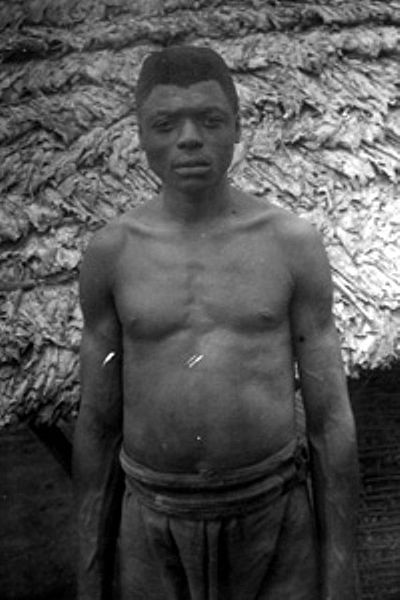
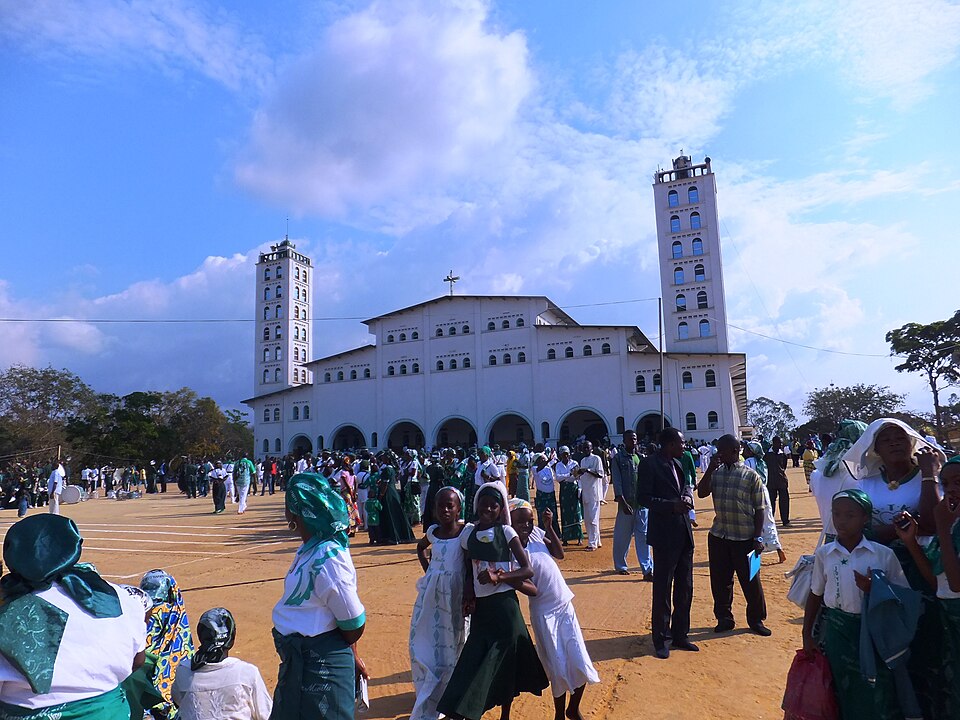
Image 1 is 400px and too small for full-page print.
Reported events
The first healing
In a vision a man "neither black nor white" told Kimbangu to go to a dying child, pray and lay on hands. He did, felt a violent shaking, and the child recovered. The church dates the start of the healing ministry to 6 April 1921 and names a woman, Kintu or Maman Kiantondo, at Ngombe-Kinsuka.
Tu dois aller là-bas, lui dit-il, prier, poser tes mains sur l'enfant et le guérir.
Reported by Kimbangu himself, as told to the Baptist missionary P. H. J. Lerrigo, who printed it in 1922, summarised by Jules Chomé; church tradition.. Recorded 1921 to 1922..
The core is Kimbangu's own report within a year, but we read it only through Chomé. The two versions differ on who was healed, a child or a woman, and on the date, 18 March or 6 April. We did not find a medical record. Nfinangani and Nzungu's Kikongo account of 1921, the movement's own earliest history, should be compared; We saw only catalogue entries.
His own report within a year, through a Baptist missionary. Versions differ on the patient and the date, and no medical record exists. Known here only through a summary, so lowered by about 10. Reviewer's judgment, not a calculation.
Sources: Kimbangu (Simon); Histoire de Simon Kimbangu, prophète, d'après les écrivains Nfinangani et Nzungu, 1921; Léon Morel
Cures and reports of resurrection at Nkamba
From March 1921 the sick, the dying and sometimes the dead were carried to Nkamba. The court martial itself refers to reports of cures and resurrections.
en faisant répandre sciemment des faux bruits de guérisons et de résurrections et en se posant en envoyé de Dieu, Kimbangu a jeté l'alarme dans l'esprit des populations indigènes
Reported by Believers; the Conseil de guerre at Thysville, a hostile official witness to the reports but not to their truth.. Recorded 1921..
The court judged the reports false and did not investigate them medically, as far as we can see. Its words prove that such reports circulated in 1921. They say nothing on whether any cure occurred. Catholic mission files printed by Vellut (2015) and Morel's reports are the next place to look.
The 1921 judgment proves that reports of cures and resurrections circulated. Scored is a raising of the dead, which the court called false rumour without medical inquiry, and no case is named. Known here only through a summary, so lowered by about 10. Reviewer's judgment, not a calculation.
Sources: Kimbangu (Simon); Judgment of the Conseil de guerre, Thysville, 3 October 1921 (as quoted); Review of Vellut, Simon Kimbangu 1921: les sources, vol. I, Fonds missionnaires catholiques
Slipping out of the arrest at Nkamba
Soldiers came to arrest him in June 1921 and he got away, staying free for about three months. Popular accounts add that attempts to execute him failed.
Reported by Colonial and church histories; Chomé credits the help of local people and chiefs.. Recorded 1921; the failed-execution story is much later..
Dates differ: 6 June (arrest order) and 21 June (Sabakinu). Chomé gives a plain cause, the complicity of villagers and two chiefs, who were themselves given twenty years. Sabakinu and Ustorf say he returned and gave himself up in September. The story of failed executions appears on Wikipedia marked as needing a citation, and we found nothing to support it; King Albert commuted the sentence before it was carried out.
Event scored: his escape, with villagers' help, and three months at large. The later story of failed executions has no support at all and is not credited here. Known here only through a summary, so lowered by about 10. Reviewer's judgment, not a calculation.
Sources: Kimbangu (Simon); Kimbangu, Simon; Simon Kimbangu (DACB, from Biographical Dictionary of Christian Missions)
Trembling in the dock
During the trial Kimbangu shook with tremors. The doctor considered them faked and he was given a cold shower and twelve strokes of the whip.
Reported by Jules Chomé, lawyer, from the trial papers.. Recorded 1921, printed 1959 and 1968..
Kimbangu's own account of the first healing also speaks of a violent shaking. The colonial doctor treated it as simulation. Here the medical judgment comes from an interested court, and the punishment is itself a record of the conditions of the trial.
A trial record, reached through a lawyer's summary, shows the tremors and the punishment. Whether they were faked or genuine is not settled by an interested court. Known here only through a summary, so lowered by about 10. Reviewer's judgment, not a calculation.
Sources: Kimbangu (Simon)
Disputes
- Was the trial just? Chomé, who studied the file, called it a religious prosecution: no violence, a sole military judge, no defence lawyer, and a heavier sentence than the prosecutor sought. Nineteen grandchildren sought a revision at the Belgian Cour de Cassation in 2010; We have not found the outcome.
- Colonial charges that he forbade taxes and manioc planting were, according to Chomé, not proved to have come from him.
- Catholic deathbed baptism: a young religious, P. François Senkoto, said Kimbangu converted to Catholicism on his deathbed, and Ustorf repeats a baptism. Chomé reports that Kimbangu's sons fiercely denied it.
- The numbers deported are disputed. Chomé reports 37,000 from Kimbanguist circles and about a tenth of that from the administration.
- Accounts of the commutation vary, crediting Belgian or British Baptist missionary appeals, and the public prosecutor's own petition for mercy.
- The church's account is of a divine envoy persecuted by the colony. Colonial papers describe a threat to order. Sources should be read with this in view, and with the note that Kimbangu left no writings of his own (Ustorf).
Still unknown
- The full text of the 1921 judgment and dossier: Archives Africains, Brussels. Vellut's source edition (ARSOM, 2005 and 2015) should print much of it.
- The result of the 2010 revision request.
- Prison file from Elisabethville, including the death date (10 or 12 October 1951).
- Birth year: 1887, 1889 or 1899 appear in different sources.
- Baptist Missionary Society letters on 1921, in the BMS archives at Oxford named by Ustorf.
Records
Sources
primary
contemporary
scholarly
reference