Revered as a jnani, one who has realised the Self. Sri Ramanasramam at Tiruvannamalai continues his memory.
Court testimony, a registered will, a physician's account, a High Court judgment, press reports and recorded talks, all near the events. His youth rests on his own later telling.
Frank Humphreys's writing from 1911, reported at second hand; the oldest source read here is Narasimha Swami's 1931 biography by title only and Brunton (1934) in full (written 39 years before their death)
Paper trail
Where they came from
Tiruchuzhi (Tiruchuli), Virudhunagar district, Tamil Nadu, India (Madras Presidency) (documented)
Tiruvannamalai and Arunachala hill, from 1 September 1896
Interred at Sri Ramanasramam, Tiruvannamalai, where his shrine is visited daily
Second of four children in an orthodox Tamil Brahmin family. Father Sundaram Iyer was a court pleader who died when he was about twelve (the reference source gives both 1890 and 1892). Mother Azhagammal. Not a priestly lineage.
No guru is recorded. He went to school in Madurai. The turning point is the death experience of 1896, known from his own later telling.
His father's death sent him to an uncle in Madurai. The 1896 fear of death had no recorded physical cause. His last years were marked by rheumatism and sarcoma.
Local people first treated the silent youth as a holy boy. Ganapati Sastri named him Maharshi in 1907. Police officer Frank Humphreys wrote about him from 1911, Narasimha Swami's biography came out in 1931, and Brunton's 1934 book reached a world readership.
Life
Venkataraman Iyer was born at Tiruchuzhi in the Madras Presidency, son of the court pleader Sundaram Iyer. In about July 1896, at sixteen and in Madurai, he reported a sudden fear of death that resolved into lasting awareness of the Self. Weeks later he left school and home and reached Tiruvannamalai on 1 September 1896. He stayed for the rest of his life.
For years he lived silently in temple precincts and in caves on Arunachala, including Virupaksha Cave from 1899. His answers to Sivaprakasam Pillai in 1902 became Who Am I? In 1907 the scholar Ganapati Sastri gave him the name Bhagavan Sri Ramana Maharshi. His mother joined him in 1916 and died in 1922, and the ashram grew around her tomb.
The English writer Paul Brunton's A Search in Secret India (1934) brought Western visitors. In the same decade he was examined on commission in two court cases and made a registered will. His talks of 1935 to 1939 were recorded by Munagala Venkataramiah.
A nodule on his left arm, found in late 1948 and diagnosed in 1949 as sarcoma, recurred after four operations and radium. He declined amputation. He died at the ashram at 8.47 p.m. on 14 April 1950, a death reported in the New York Times.
Images
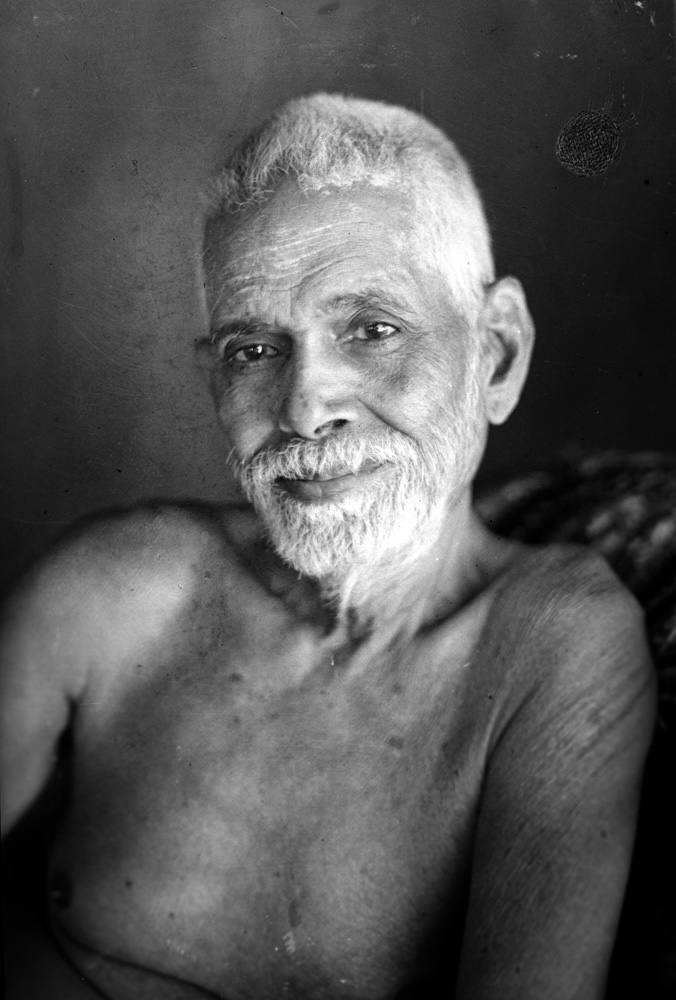
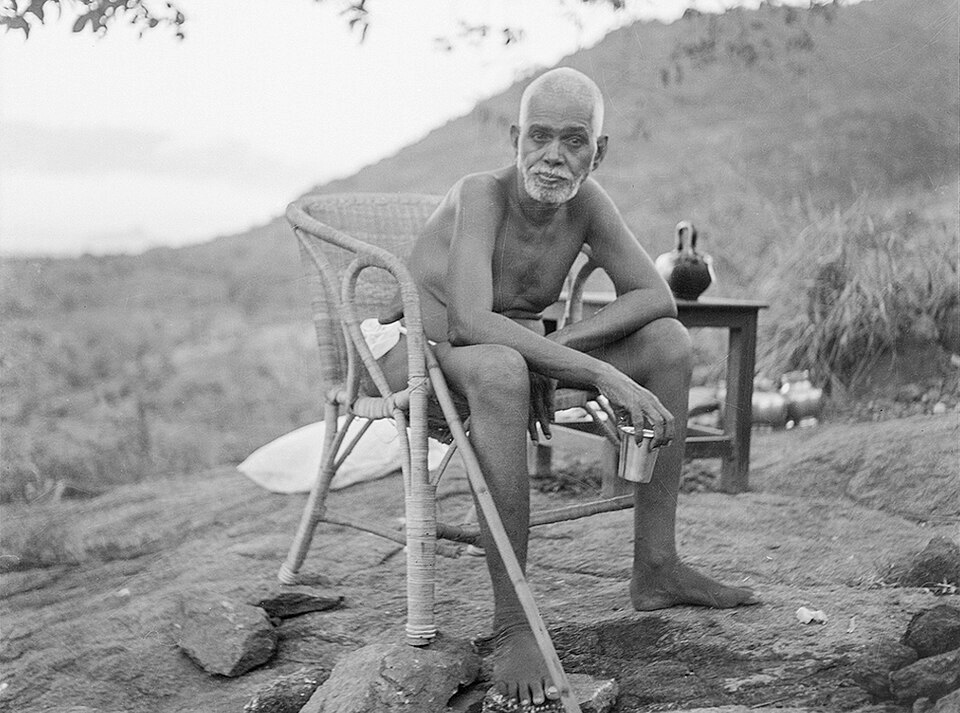
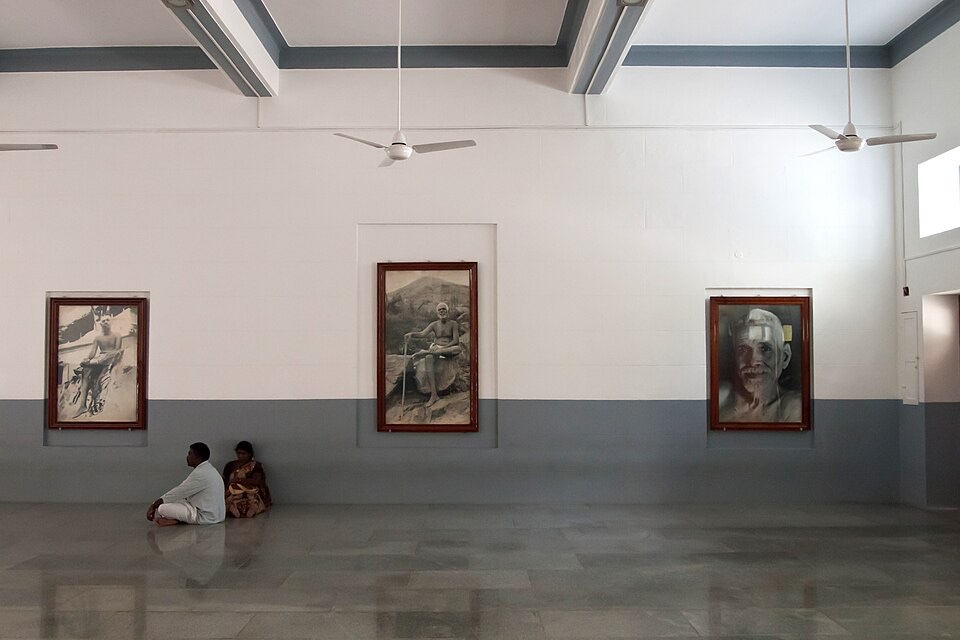
Reported events
The death experience of 1896
In Madurai he was seized by fear of death, lay down and enacted dying, and realised that what he was did not die with the body. The state reportedly never left him.
Reported by Ramana himself, told to Narasimha Swami, Brunton and others. Recorded Told decades later; Self-Realization 1931, Brunton 1934.
A first-person report, but given about thirty years after the event. Nobody witnessed it. No illness is recorded. It is the foundation of his teaching and cannot be tested.
Event scored: the fear of death and the change he reported, as an experience. It is his own account, about thirty years later, with no witness. Reviewer's judgment, not a calculation.
Sources: Ramana Maharshi; A Search in Secret India
The star at the moment of death
A French press photographer told Arthur Osborne that a large star trailed slowly across the sky at the moment of death, and Osborne says many saw it, as far off as Madras, moving towards Arunachala. An American reporter also wrote of a meteor.
a meteor cut a golden path across the sky
Reported by Arthur Osborne, resident devotee, citing an unnamed French photographer; Darrell Berrigan in the Saturday Evening Post. Recorded Berrigan c. 1950; Osborne's biography later.
Multiple people seem to have seen something, and a bright meteor is a natural explanation. Osborne does not name the photographer; the common identification with Henri Cartier-Bresson was not confirmed in anything opened. The 'moment of death' link depends on timing nobody measured against the sky.
Two separate writers report a bright light in the sky, and a meteor is a natural explanation. The link to the moment of death rests on timing nobody measured. Reviewer's judgment, not a calculation.
Sources: Ramana Maharshi and the Path of Self-Knowledge, Chapter 17; Reprinted press reports on the death
Sarcoma borne without complaint, amputation refused
Surgeons operated in February, March, August and December 1949 and applied radium. He declined amputation, and Osborne cites a tradition that the body of a jnani should not be mutilated. Devotees report that his calm under severe pain showed he was not the body.
Reported by Dr Shankar Rao, retired District Medical Officer and attending physician; Arthur Osborne. Recorded Rao's article in The Call Divine, reprinted 2006.
The disease is well documented, and the reported microscopy, surgeons' visits and press reports agree. The sources differ on small points such as the elbow site and the March operation date. The AP report said right arm; the physician says left. Composure under pain is a character report, not a miracle claim. No hospital or pathology file has been found.
The attending physician and the press agree on the disease and treatment, with small differences. Composure under pain is a character report and not a wonder. Reviewer's judgment, not a calculation.
Sources: Treatment of Sri Bhagavan; Ramana Maharshi and the Path of Self-Knowledge, Chapter 17; Reprinted press reports on the death
Peace felt in his presence
Brunton, arriving as a sceptical inquirer, describes the sage gazing unmoving and a growing stillness in his own mind.
Reported by Paul Brunton (Raphael Hurst), British journalist and first-hand visitor. Recorded Published 1934.
Honest as testimony to Brunton's experience, but he wrote for a popular market, and he is a storyteller. Similar reports by others could reflect expectation and setting.
Event scored: Brunton's own sense of stillness, in a book published within about three years. He was a popular writer, but the claim is subjective and modest. Reviewer's judgment, not a calculation.
Sources: A Search in Secret India
Disputes
- Perumal Swami, a former attendant and manager, sued in the 1930s, arguing that a sannyasin could not own property and so could not appoint his brother as manager. Ramana was examined on 15 November 1936 and said he belonged to the atiasrama, beyond the four stages. David Godman reports a court stenographer took his answers.
- A devotee account says that Ramana was exempted from court appearance by a Gazette notice after Grant Duff intervened. This is unconfirmed by any government text.
- After his death the state endowments authority sought control of the ashram. In Ramanasramam v. Commissioner for Hindu Religious and Charitable Endowments (12 December 1959, AIR 1961 Mad 265) the Madras High Court allowed the ashram's appeal. It held the shrine was not a temple and called the institution a religious public trust of a cosmopolitan character.
- He marked his 1938 will with an X and a line and authorised G. Sambasiva Rao to sign for him, in the presence of senior devotees. He later refused to sign a proposed second will.
Still unknown
- The original 1936 court stenographer's record. Godman says only a lawyer's copy survives in the ashram president's keeping; the court's own file was not traced.
- The District Munsif's judgment in the Perumal Swami suit. A devotee account says it found the ashram to be private property.
- Pathology reports and hospital notes from the Madras surgeons of 1949.
- The identity of the French photographer who told Osborne about the star.
Records
Sources
primary
contemporary
hagiography
scholarly
reference