Regarded by the Ramakrishna Math and Mission, and many Hindus, as an avatar. No formal process exists in Hinduism.
Eyewitness conversation notes by M. from 1882, a physician who appears as a sceptic, and an outside admirer's letter. The grade applies to the last four years of life; his youth rests on later devotional biography.
Indian Mirror notice of 28 March 1875, reported at second hand; M.'s diary notes from 1882 are the earliest extended source (written 11 years before their death)
Paper trail
Where they came from
Kamarpukur, Hooghly district, West Bengal, India (Bengal Presidency) (documented)
Dakshineswar temple garden, north of Calcutta, from about 1855; Calcutta and Cossipore in his last year
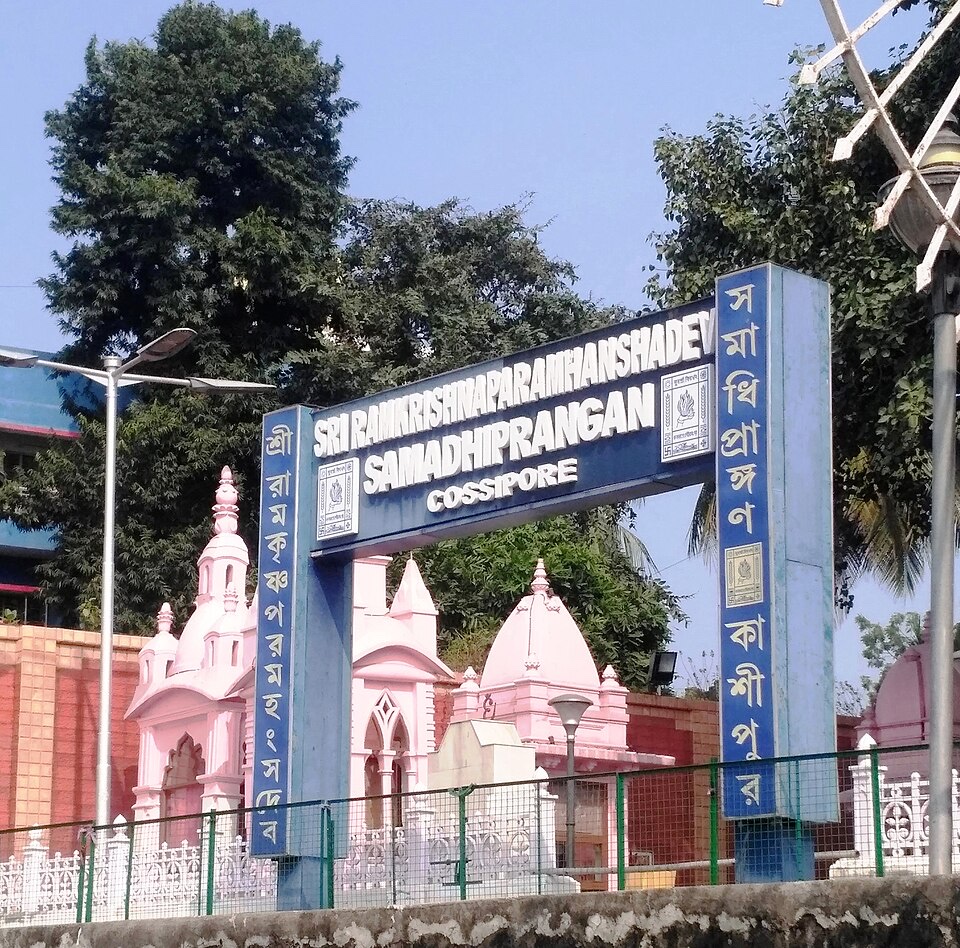
Cremated at Baranagore on the Ganges; the Cossipore garden house and cremation site are maintained by the Ramakrishna Order and visited, as is Belur Math, where followers keep relics
Father Khudiram Chattopadhyaya, mother Chandramani Devi. Poor Bengali Brahmins; the youngest of four children. His brother Ramkumar was a priest, so the family had a working priestly role but no famous lineage.
Little schooling. Served as priest at Dakshineswar. Tradition names the Bhairavi Brahmani (Tantra) and Totapuri (Vedanta, 1865) as teachers. The turning point followers cite is an overwhelming vision of Kali; that account comes from devotional biography.
His father lost his village home after refusing, in 1814, to give false witness for his landlord, according to the Gospel's introduction. Those around him feared for his sanity in his twenties, and a physician was called. He died of a throat disease after about sixteen months of illness.
The Bhairavi Brahmani is said to have declared him an Incarnation, as the Gospel's introduction reports. The first outside notice in print is reported to be Keshab Sen's Indian Mirror of 28 March 1875. Sen, P. C. Mozoomdar, then M. and Vivekananda spread the reputation, and Max Muller's 1898 book carried it to Europe.
Life
Gadadhar Chattopadhyaya was born at Kamarpukur in Bengal to a poor, devout Brahmin family. His elder brother Ramkumar became priest at the Kali temple built at Dakshineswar by Rani Rasmani, a wealthy Calcutta widow, and consecrated in 1855. Ramakrishna took up the priesthood there about the age of twenty and spent most of his life in its garden.
He was married in 1859 to Saradamani (Sarada Devi), then a small child; the Gospel's introduction says the marriage was never consummated. Followers report years of intense practice under teachers including the Bhairavi Brahmani and the Vedanta monk Totapuri, who initiated him in 1865. Relatives and well-wishers at first took his states for illness, and physicians were called.
From 1875 the Brahmo leader Keshab Chandra Sen publicised him among educated Calcutta. Mahendranath Gupta, a headmaster who signed himself M., first visited in February 1882 and kept notes of what he heard until the end. Young men including Narendranath Datta, later Swami Vivekananda, gathered round him.
In 1885 he developed a sore throat that was first called clergyman's throat and later diagnosed as cancer. He was moved to Syampukur and then to a garden house at Cossipore, treated by the homeopath Dr Mahendralal Sarkar, and died there in August 1886. His body was cremated at the Baranagore ghat.
But there was another side of his character, which of course one could not take up, because it was not edifying.
His speech at times was abominably filthy. For all that, he was, as you say, a real Mahatmah.
Images
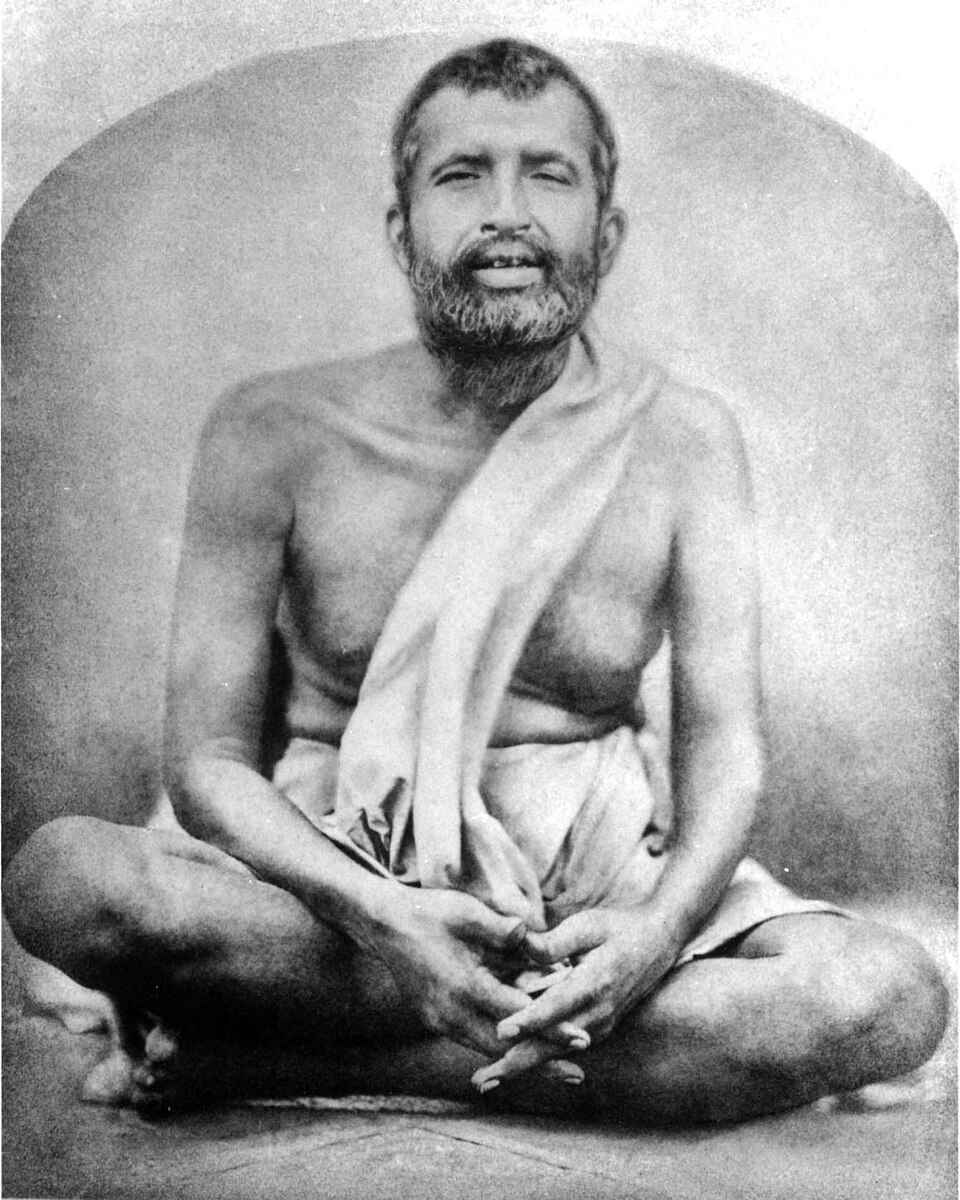
Reported events
Samadhi with loss of bodily awareness
M. records Ramakrishna repeatedly falling into motionless absorption in the middle of conversation. Vivekananda's account, printed by Max Muller, adds that even the best doctors could find no pulse or heartbeat in these states.
during which the best doctors even could not find any pulsation or beating of the heart
Reported by M. (Mahendranath Gupta), eyewitness devotee; Vivekananda, disciple, through Max Muller. Recorded M.'s notes from 1882; printed in Bengali 1902 to 1932. Muller 1898..
That he entered such states is about as well attested as anything in the record, since many observers, including a sceptical physician, describe them. The no-pulse claim comes only from a disciple. No physician's measurement of it was found, and Muller himself noted that disciples may be partial.
Many observers, including a sceptical physician, describe the trances, so those are solid. Scored is the absent pulse, which comes only from a disciple, with no measurement. Reviewer's judgment, not a calculation.
Sources: The Gospel of Sri Ramakrishna; Ramakrishna: His Life and Sayings
Could he cure his own cancer?
Some devotees, such as Mahima Chakravarty, held that he could heal himself if he wished. Dr Sarkar told M. that this was impossible and that the disease was incurable.
We are physicians; we know what cancer is.
Reported by M., who reports his own conversation with Dr Mahendralal Sarkar. Recorded Autumn 1885 in M.'s notes; published later.
A useful case because the disbelieving doctor speaks in the devotee's own record. No cure occurred. M.'s text is our only report of the exchange, so Sarkar's words reach us through a disciple.
Event scored: that no cure occurred and his doctor said so. M.'s notes are a devotee's record, yet they preserve the doctor's disbelief. Reviewer's judgment, not a calculation.
Sources: The Gospel of Sri Ramakrishna
The final samadhi and the doctor's verdict
The Gospel's introduction says he cried the name of Kali three times, entered final absorption at two minutes past one, and that Dr Sarkar came the next noon and judged life had left not more than half an hour before. Disciples at first took it for ordinary samadhi.
he entered into Samadhi, from which he never returned.
Reported by Nikhilananda's introduction to the Gospel, drawing on disciples; Muller from Vivekananda. Recorded Muller 1898; Nikhilananda 1942.
The sources disagree on time: Muller says about 10 p.m. on 16 August, the Gospel about 1 a.m. after Sunday 15 August. Sarkar's estimate, if accurately reported, would place death about eleven hours after the disciples' time, which no source opened here explains. No death certificate or medical note has been located.
Death from cancer in August 1886 is secure, though the sources disagree on the hour. Sarkar's verdict reaches us only through disciples. Reviewer's judgment, not a calculation.
Sources: The Gospel of Sri Ramakrishna; Ramakrishna: His Life and Sayings
Sarada Devi hears his voice after death
As she was about to remove the marks of a Hindu married woman, Sarada Devi is said to have heard the words that he had only passed from one room to another.
Reported by Nikhilananda's introduction, reporting Sarada Devi's own experience. Recorded Printed 1942; earlier tradition not traced here.
A private experience with a single witness, and the version opened here is second-hand. It cannot be checked, and nothing excludes a grief experience. It explains why she did not adopt widow's dress.
Event scored: that she heard the words, as an experience. It is a single private report, second-hand here, and printed 56 years later. Reviewer's judgment, not a calculation.
Sources: The Gospel of Sri Ramakrishna
Disputes
- Mozoomdar, an admirer, told Max Muller in 1895 that part of Ramakrishna's character was left unpublished as not edifying, and that his speech could be filthy. Muller printed this in 1898.
- Sumit Sarkar notes that the Kathamrita appeared 15 to 50 years after the sessions, covers only about 186 days, and is a constructed text; he also notes that the full diary has not been made public (as summarised in the reference article opened).
- Jeffrey Kripal's Kali's Child (1995) argued that the mystical states grew from childhood trauma and homoerotic desire, and that the Order concealed 'secret talks'. Swami Tyagananda and Pravrajika Vrajaprana answered at book length in 2010, disputing his Bengali. Swami Atmajnanananda and the historian Narasingha Sil also attacked the book.
- Critics including Kripal call Nikhilananda's 1942 English Gospel inaccurate and rearranged, while Lex Hixon and Swami Tyagananda defend it. Scholars should use the Bengali.
Still unknown
- M.'s original diaries: reported as held by his descendants rather than the Order. Their contents have never been published in full.
- Whether any written medical note by Dr Sarkar or the other physicians survives. Biswas's edition of Sarkar's diaries lists 1873 to 1875, 1879 to 1883 and 1896 to 1899, so 1885 to 1886 seems to be missing.
- The exact text of the Indian Mirror notice of 28 March 1875, not seen here.
- The actual histology of the throat disease. Nothing from 1885 to 1886 shows it was examined under a microscope.
Records
Sources
primary
contemporary
scholarly
reference