Seventh Rebbe of Chabad-Lubavitch. Honoured by Congress with a gold medal. Many followers regard him as the Messiah. The Rabbinical Council of America issued a statement rejecting belief in a Messiah who dies before completing his mission.
Federal court opinions, Acts of Congress, an FBI file, and press from his lifetime survive, along with his own notebooks and talks. The evidence for any individual blessing is much weaker than the evidence for his life.
His notebooks from 1932, reported by JTA (written 62 years before their death)
Paper trail
Where they came from
Mykolaiv, Ukraine (Nikolayev, Russian Empire) (documented)
Crown Heights, Brooklyn, New York
Old Montefiore Cemetery, Queens, New York, in the ohel beside his father-in-law. Heavily visited.
Father Levi Yitzchak Schneerson, a scholar and chief rabbi of Yekaterinoslav; mother Chana, from a rabbinic family. A direct descendant of Chabad's leaders; son-in-law of the sixth Rebbe.
Private Torah tutoring as a prodigy, per movement and reference accounts. Then secular study in Berlin and Paris. His notebooks from 1932 survive. The turning point followers cite is his acceptance of leadership after 1950.
Soviet repression of religion, Nazi Germany, and the flight from occupied France. Congress described him as a refugee from both Stalin's Russia and Nazi Germany.
Named head of movement institutions by his father-in-law from 1941, then accepted as Rebbe after 1950. The reputation spread through emissaries, mass media and, by 1991, an Act of Congress.
Life
Menachem Mendel Schneerson was born in Nikolayev in 1902 to Levi Yitzchak Schneerson, a noted scholar, and Chana. He grew up in Yekaterinoslav, where his father became chief rabbi.
In 1928 he married Chaya Mushka, daughter of the sixth Rebbe, in Warsaw, and lived in Berlin and then Paris, studying science and engineering while working for his father-in-law. The exact courses are disputed. A visa application filled out in Marseilles in April 1941 survives, and the couple reached New York on 23 June 1941.
He became Rebbe after his father-in-law died in 1950, and built the movement's emissary network from 770 Eastern Parkway. A federal court in 1987 recorded how Lubavitch was funded and governed, in a case over his predecessor's library that the movement won.
Congress named Education Day for his birthday from the late 1970s. He suffered a stroke in 1992, about 27 months before his death on 12 June 1994. He left no children and named no successor, and a dispute over his messianic status continues.
is universally respected and revered
Schneerson has never come to Israel as there is reportedly a philosophic objection to recognizing the State of Israel before the arrival of the Messiah.
Images
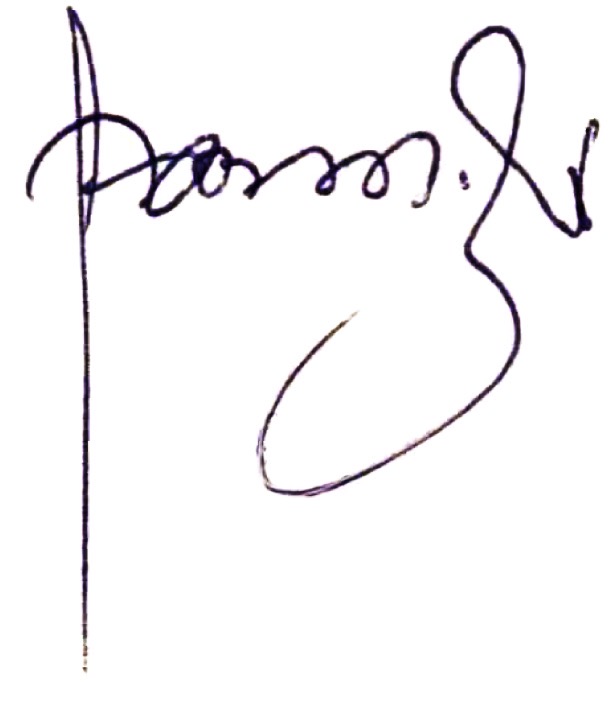
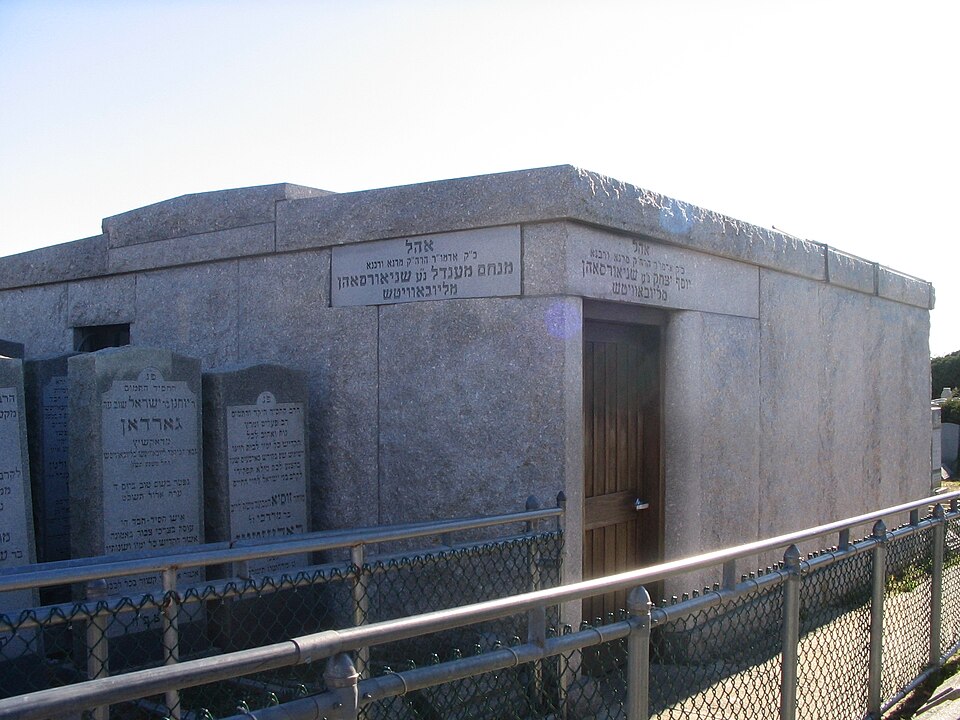
No photograph from life with a confirmed license was found. Image 2 needs clearance before commercial use. A 1951 wedding photograph was rejected because it shows private people who may be living.
Reported events
Blessings at the Sunday dollars line
From 1986 he stood each Sunday as thousands filed past for a blessing or a word of advice, and gave each a dollar for charity. Followers report that blessings given there and in letters were fulfilled.
an abiding faith in the Rabbi's wisdom which apparently knows no bounds
Reported by Chabad.org for the practice; followers for the results. Recorded Practice documented in his lifetime; individual reports mostly later.
The practice itself is beyond doubt. A movement source says he could stand up to eight hours. No individual fulfilled blessing was checked against a record, so this page does not vouch for any one case. The FBI memo independently notes the unquestioning trust of followers in 1972.
The Sunday line itself is beyond doubt, with thousands present. Scored is the fulfilment of blessings, and no case was checked, so it ranks with other unnamed wonders. Reviewer's judgment, not a calculation.
Sources: FBI file on Rabbi Menachem Schneerson, Part 01 (FOI/PA 1343607-001); 1986: 'Sunday Dollars'
Identification as the Messiah
Many followers came to regard him as the Messiah, a belief that continued after his death. In his last years he said the messianic age was at hand. His own response to being named was, by David Singer's account, ambivalent: at times angry and at times acquiescent.
He's going to get up and take us into redemption.
Reported by Followers; critics including David Berger; JTA reporters. Recorded From the 1990s, in press and rabbinic statements.
That the belief existed and exists is well documented, and JTA recorded it on the day he died. Whether he endorsed it is disputed. No messianic reign followed. Berger holds that Judaism has no place for a Messiah who dies first; messianists cite sources they read otherwise.
Event scored: that followers held this belief, recorded by reporters on the day he died. Whether it is correct is not scored, and his own stance is disputed. Reviewer's judgment, not a calculation.
Sources: In Crown Heights, Confusion, Grief and Fervent Prayers for Redemption; The Rebbe, the Messiah, and the Heresy Hunter
Belief that he did not truly die
Some followers hold that he is alive or will return from the grave. Singer's review reports versions in which he is alive, will return, or is divine. His death from a heart attack at 92 was reported at once, and thousands came to the funeral.
Reported by Followers, as reported by Singer and JTA. Recorded From June 1994.
His death is a public fact. The claim concerns what followers believe, and this page records that belief. Berger reports about 150 Lubavitch rabbis endorsing a 1997 messianist ruling, a figure given by a critic and repeated by a reviewer.
Event scored: that followers hold this belief, not that he lives, since his death is a public fact. Nobody here claims to have seen anything. Reviewer's judgment, not a calculation.
Sources: In Crown Heights, Confusion, Grief and Fervent Prayers for Redemption; The Rebbe, the Messiah, and the Heresy Hunter
Disputes
- David Berger calls messianist belief heresy and faults Orthodox leaders for tolerating it; Singer's review disputes parts of his case.
- Heilman and Friedman's 2010 biography drew objections from within Chabad. The biography itself was not read here.
- In 1990 Rabbi Schach attacked non-observant Jews, and the Rebbe answered, without naming him, that every Jew is part of God. The two movements were long at odds.
- The FBI's 1972 memo says he immigrated in 1925 and worked for the US Navy. Other records show arrival in 1941. It shows how weak a file source can be.
Still unknown
- Exact course records from Berlin, Paris and the ESTP were not reached. Accounts differ on whether he was enrolled or audited at the Sorbonne.
- The Serpa Pinto passenger list and the 1941 visa file are not yet in hand. The National Archives and Jewish Educational Media may hold them.
- Later parts of the FBI file were blocked by the vault site's browser check; only Part 01 was read, and that from Commons.
- His full stance on the messianic campaign needs his recorded talks, which were not reviewed.
Records
Sources
primary
contemporary
hagiography
scholarly
reference