Condemned as a relapsed heretic 1431; sentence annulled 7 July 1456; canonized 1920. Prologue figure, the one exception to the book's 1600 line.
Her answers were recorded by notaries in 1431, and about 135 witnesses were deposed from 1450 to 1456. Few medieval lives of ordinary-born people are so directly recorded.
Register of the Parlement of Paris, 10 May 1429, with Clement de Fauquembergue's marginal sketch (written 2 years before their death)
Paper trail
Where they came from
Domremy (now Domremy-la-Pucelle), France (documented)
Loire valley and Champagne, France; tried at Rouen, Normandy
No grave. Witnesses in 1456 said her ashes were thrown in the Seine at Rouen. The execution site at Rouen is still visited.
Daughter of Jacques d'Arc and Isabelle, described by witnesses in 1455 as good Catholics of good repute; a farming household, not a religious lineage.
No formal schooling is recorded. She names her voices as her teachers. The turning point in her own account is the first voice at about thirteen.
The Hundred Years' War and a disputed French succession. Orleans was under siege when she arrived, and her region lay on a contested border.
Laxart and Vaucouleurs townspeople backed her first, then Charles's court after the Poitiers examination. Orleans made her famous. Her later reputation rests on the 1456 annulment, and on a nineteenth-century cult that led to canonization in 1920.
Life
Jeanne was a farmer's daughter from Domremy on the border of Lorraine. Her neighbours told the 1455 inquiry she was devout, worked with her parents, and played at the Ladies' Tree with other village children. At her trial she said a voice from God first came to her at about thirteen, at noon in summer, in her father's garden.
In early 1429 her kinsman Durand Laxart took her to the captain Robert de Baudricourt at Vaucouleurs, who at first told Laxart to box her ears. Townspeople bought her men's clothes and a horse, and she reached the Dauphin Charles at Chinon. After examination by clergy at Poitiers she joined the relief of Orleans, where the siege was lifted in May 1429. Charles was crowned at Reims that July.
Burgundian troops captured her at Compiegne in 1430 and she passed to the English. At Rouen a church court under Bishop Pierre Cauchon questioned her from February 1431. She signed an abjuration in May, resumed men's dress within days, said her voices had rebuked her, and was burned as a relapsed heretic on 30 May 1431.
Inquiries in 1450 and 1452 led to a papal commission. Depositions were taken from 1455 at Domremy, Orleans, Paris and Rouen, and on 7 July 1456 the judges annulled the sentence. The two trials together give her own recorded words and the sworn memories of people who knew her, which is why she opens this book despite predating its period.
If I am not, may God place me there; if I am, may God so keep me.
All I said and revoked, I said for fear of the fire.
We are all lost; we have burnt a Saint
Images
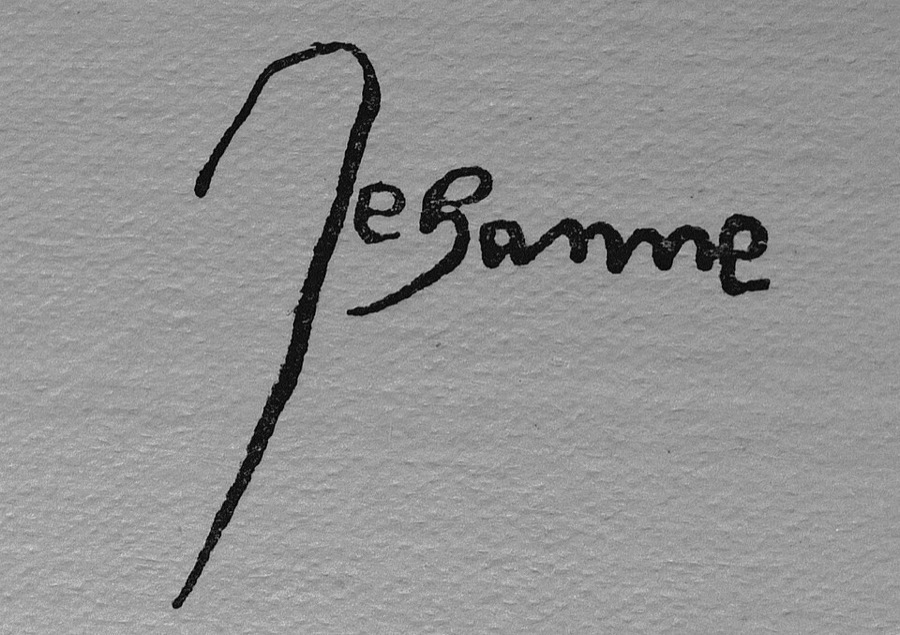
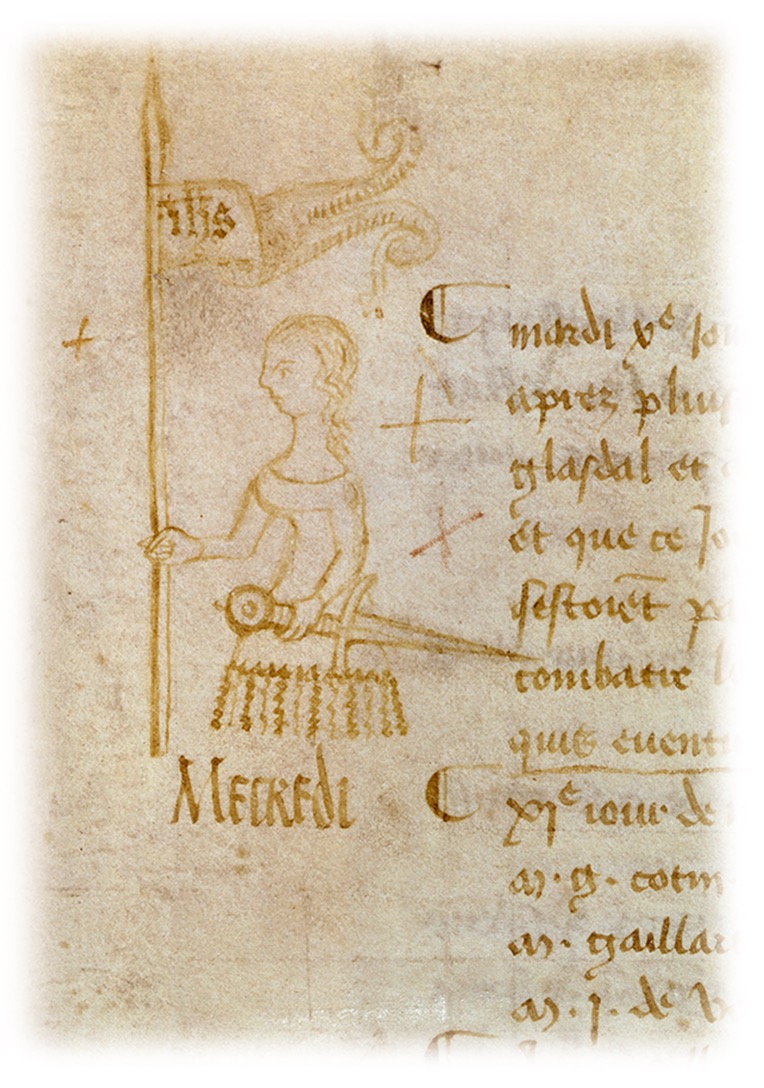
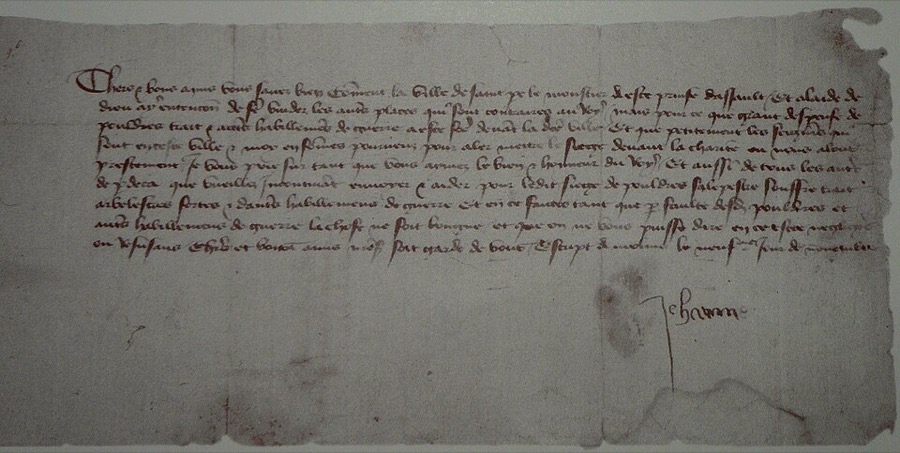
No portrait from life survives. At trial Joan said she had seen one painting of herself, at Arras in a Scot's hands, and had never had any likeness made.
Reported events
The voices
Joan testified that a voice from God came to her at about thirteen, accompanied by light, and that she later identified Saint Michael, Saint Catherine and Saint Margaret.
I was thirteen when I had a Voice from God for my help and guidance.
they rose more from natural causes and human intent than from anything supernatural
Reported by Joan herself, under hostile questioning at Rouen. Recorded February to March 1431, in the trial record.
Her words are unusually well attested, since notaries took them down in French and part of the French minute survives. What the record proves is that she consistently said this under pressure, apart from her May abjuration, which she withdrew. Her judge-assessor Jean Beaupere told the 1450 to 1452 inquiry he thought the apparitions came from natural causes and human intent. Modern medical diagnoses are retrospective guesses.
Event scored: that she heard and saw these things, as an experience. Notaries took down her words under hostile oath, and part of the French minute survives. Reviewer's judgment, not a calculation.
Sources: Jeanne d'Arc, Maid of Orleans, Deliverer of France: being the story of her life, her achievements, and her death, as attested on oath and set forth in the original documents; Proces de condamnation et de rehabilitation de Jeanne d'Arc, dite la Pucelle
Foretelling her wound at Orleans
Her confessor said she predicted she would be wounded in the attack on the bridge fort, and that an arrow struck her there on 7 May 1429.
Jeanne, as she had predicted, was struck by an arrow above the breast.
Jeanne was there wounded by an arrow which penetrated half-a-foot between the neck and the shoulder
Reported by Jean Pasquerel, her chaplain and confessor. Recorded Deposition in the 1455-56 inquiry, about 27 years later.
The wound is confirmed by Dunois, who was present and also gave evidence, so the injury is solid. The prediction rests on Pasquerel, a devoted witness speaking after her death. Murray's text prints a date of 27 May in Dunois's deposition, which conflicts with the May 1429 attack and looks like an error of transmission. A soldier in the front of an assault had a high chance of being hit.
The wound is solid, with a second witness. The prediction rests on her chaplain's sworn memory after 27 years, and soldiers at the front of an assault were often hit. Reviewer's judgment, not a calculation.
The change of wind on the Loire
Dunois said the wind turned just after Joan announced it, letting supply boats pass upstream to Orleans, and he counted this among events he took as the work of God.
All this was much more the work of God than of man: the sudden change of wind immediately Jeanne had announced it
Reported by Jean, Count of Dunois, commander at Orleans. Recorded Deposition at Orleans in 1456.
Dunois was a senior soldier with direct knowledge of the river operation, but he spoke under oath in a proceeding meant to vindicate her and Charles VII. A wind shift on the Loire is an ordinary event. The claim is about timing.
A sworn senior commander with direct knowledge, speaking 27 years later in a proceeding meant to clear her. A wind shift is ordinary and only the timing is in question. Reviewer's judgment, not a calculation.
The sword behind the altar at Fierbois
Joan testified that she knew through her voice that a rusty sword marked with five crosses lay in the ground at Saint Catherine de Fierbois, and that an armourer of Tours found it.
the sword was in the ground, and rusty; upon it were five crosses; I knew by my Voice where it was.
Reported by Joan herself. Recorded 27 February 1431, in the trial record.
She had stopped at Fierbois and heard Mass there shortly before, by her own account, so she could have heard of old swords deposited at a pilgrim shrine. The priests who found it did not testify in the record I checked. She was unsure whether it lay before or behind the altar.
Her sworn words are as secure as testimony gets. That the sword was found as she said has no second witness, and she had just been at the shrine. Reviewer's judgment, not a calculation.
Disputes
- Rehabilitation witnesses were interested parties: the 1456 process served Charles VII's legitimacy as well as her name, and its sworn memories come 25 years after the events.
- The condemnation record was compiled by her opponents. Notary Guillaume Manchon and others told the later inquiry that she was held in irons by English guards and that assessors interrupted her questioning.
- Why she resumed men's dress is disputed. She said promises to her had not been kept. Ysambard de la Pierre said she told of great wrong and violence done to her by the English while in women's clothes. Beaupere said he understood no such thing from her.
- Massieu reported, from the midwife Anna Bavon, that the Duchess of Bedford's examiners found her a virgin. This is hearsay at one remove.
- She was a military leader in a brutal war, and her letter to the English threatens them with force. Her later cult has been claimed by opposing political camps in France.
Still unknown
- What she actually said to the Dauphin at Chinon: her accounts of the 'sign' to the king changed under questioning. Only the trial manuscripts bear on this.
- The record of the Poitiers examination of 1429 is lost, though she repeatedly referred to it. No archive is known to hold it.
- Whether she could write her own name unaided. The signatures on the 1430 Reims letters are held in the Maleissye family archive.
Records


Sources
primary
scholarly
reference