Beatified 14 June 1925; canonized 8 December 1933 by Pius XI. The Bishop of Tarbes approved the apparitions on 18 January 1862.
Police, prosecutor and clerical records were written while events unfolded, and doctors signed the exhumation reports. The main limit is that we read many only through editions and summaries.
Police and judicial reports, February to March 1858, printed in Laurentin, Lourdes: Documents authentiques (written 21 years before their death)
Paper trail
Where they came from
Lourdes, Hautes-Pyrenees, France (documented)
Lourdes, then Nevers
Glass shrine in the chapel of Saint-Gildard, Nevers, still visited; Lourdes is one of the world's largest shrines.
Daughter of a failed miller and a miller's daughter. Poor, Catholic, no clerical lineage.
Almost none before 1858. She was sent to Bartres in September 1857 and returned to Lourdes in January 1858.
Family bankruptcy, hunger and a period in the cachot, plus lifelong asthma.
A growing crowd at the grotto from February 1858, then Dr Dozous, Estrade and other townspeople. Bishop Laurence's commission gave formal approval in 1862.
Life
Bernadette was born at the Boly mill in Lourdes, eldest child of Francois Soubirous and Louise Casterot. The family lost the mill and by 1857 lived in one room, the former jail called the cachot. She had asthma, could not read or write at fourteen, and had not made her First Communion.
On 11 February 1858, gathering wood at Massabielle, she said she saw a young lady. Further visions followed through 16 July, eighteen in the usual count. On 25 March she said the lady called herself the Immaculate Conception. Crowds grew. The police commissioner Dominique Jacomet, the imperial prosecutor Dutour and the prefect Massy all took an interest, and the grotto was barricaded for a time.
The bishop's commission reported in January 1862 in her favour. She was admitted to the hospice run by the Sisters of Nevers in 1860, where she learned to read and write, and in 1866 she entered their convent of Saint-Gildard at Nevers, as Sister Marie-Bernard. She worked in the infirmary and sacristy, and was often ill.
She died at thirty-five on 16 April 1879. Her body was exhumed in 1909, 1919 and 1925 for the cause, and has lain in a glass shrine at Nevers since August 1925. The face and hands on view are wax.
l'état très-sain et très-normal de l'enfant
Images
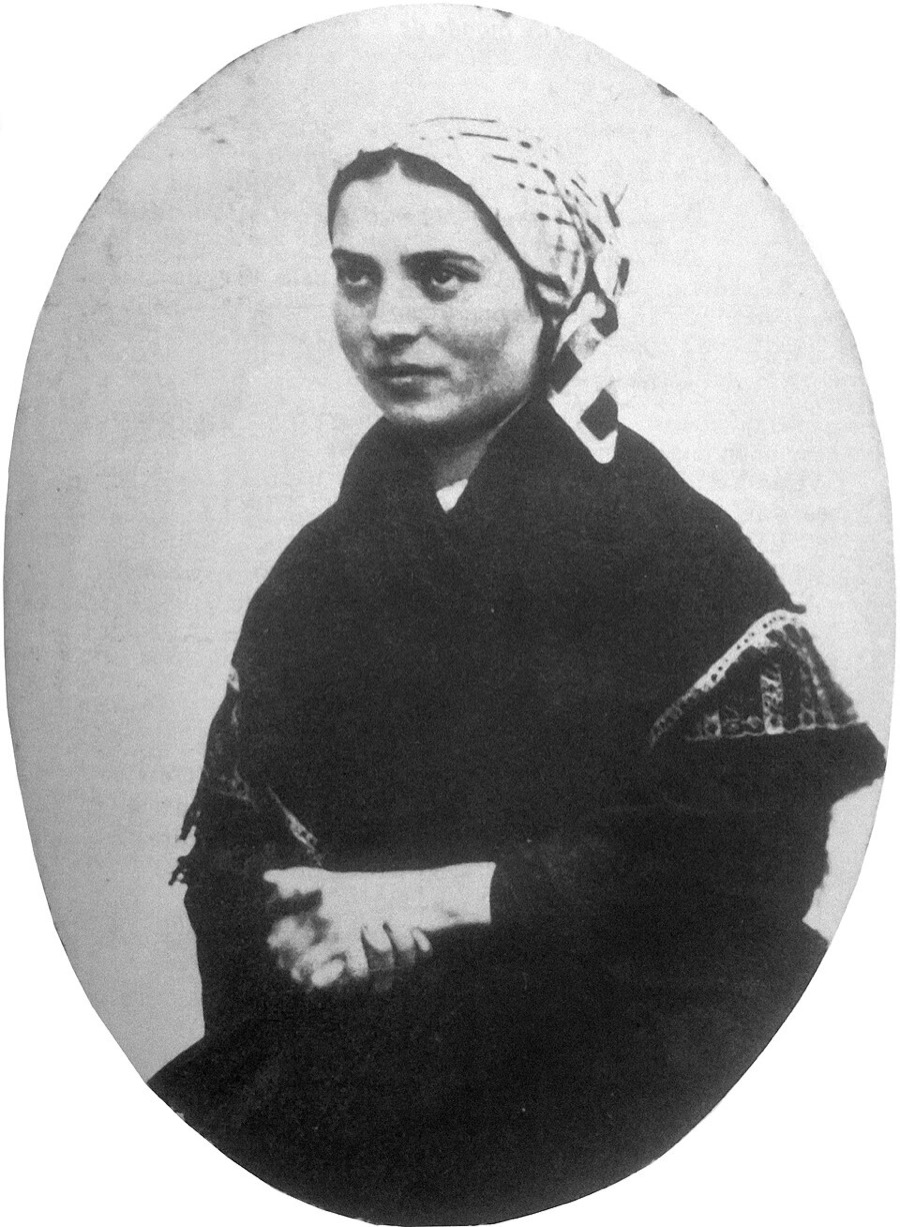
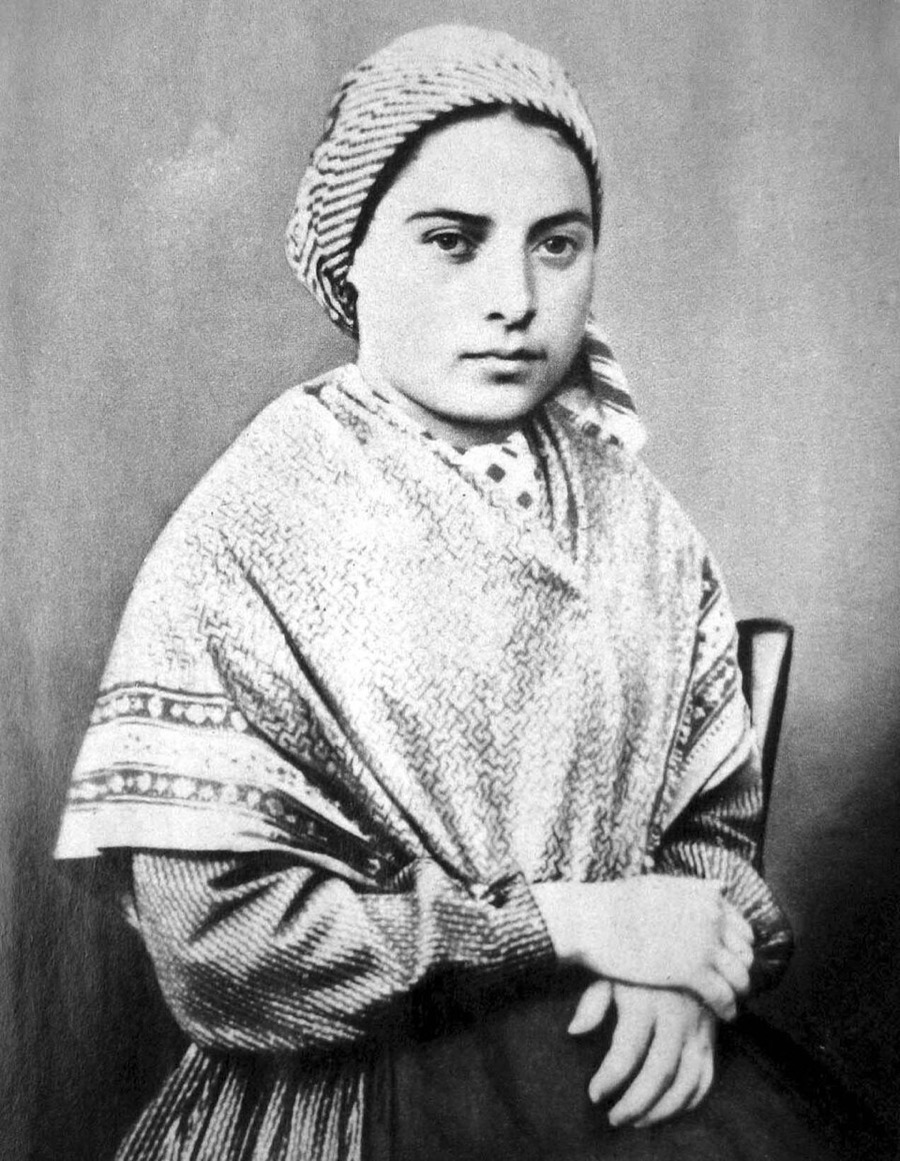
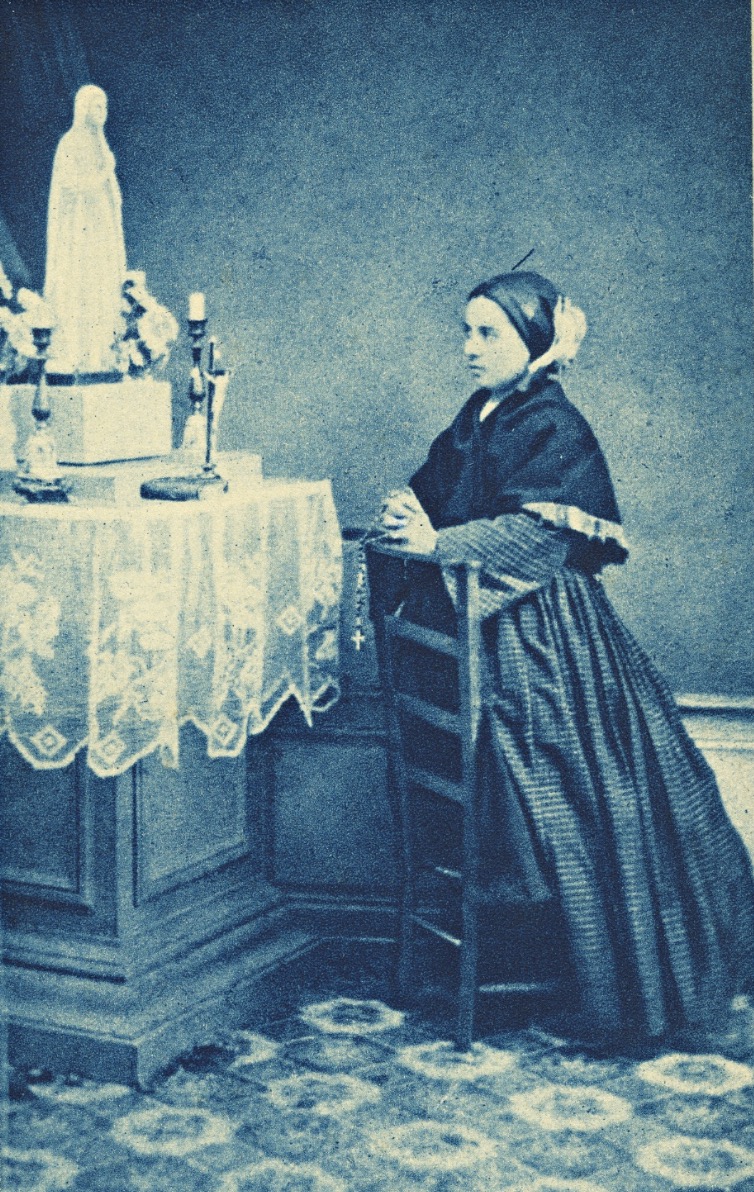
Reported events
Eighteen apparitions at Massabielle
Bernadette said a young lady appeared to her eighteen times between 11 February and 16 July 1858. No one else claimed to see the lady.
Reported by Bernadette herself, questioned repeatedly by police, prosecutor, clergy and commission. Recorded February 1858 onward, in police reports and a procès-verbal of 18 March 1858.
Her story is unusually well tested. Police reports survive, printed in Laurentin's Lourdes: Documents authentiques. The Lourdes sanctuary says she corrected Jacomet when he changed her words, and did not add or retract. Crowds saw her in ecstasy, not the lady. Therese Taylor notes that many Church and State documents survive and that devotional literature serves hagiography rather than inquiry. The authorities suspected fraud or madness and could not prove either.
Event scored: that she reported these visions and was seen in ecstasy, not that the lady was visible, since no one else claimed that. Police and prosecutors questioned her at the time and could not shake the story. Known here only through a summary, so lowered by about 10. Reviewer's judgment, not a calculation.
Sources: Lourdes apparitions; 'So Many Extraordinary Things to Tell': Letters from Lourdes, 1858; Quidquid Immaculatae: Litterae decretales de canonizatione; Saint Bernadette Soubirous
The name 'Immaculate Conception'
On 25 March 1858 she said the lady gave the name 'I am the Immaculate Conception', a phrase devout writers say she could not have understood. The dogma had been defined in 1854.
Reported by Bernadette, then her parish priest Peyramale and later writers. Recorded Spring 1858.
The phrase was in church use after 1854, so an unschooled girl could have heard it, even if she did not understand it. Lasserre's dramatic telling was printed over a decade later. Pius XI's decretal of 1933 treats the visions as linked to the dogma.
Event scored: that she reported this name on 25 March 1858. The phrase was already in church use, so what she could have known remains open. Known here only through a summary, so lowered by about 10. Reviewer's judgment, not a calculation.
Sources: Notre-Dame de Lourdes; Quidquid Immaculatae: Litterae decretales de canonizatione; Decree on two miracles, and Tuto decree
The candle at the grotto, 7 April 1858
Dr Pierre-Romaine Dozous reported that a candle flame played around her hand during ecstasy without burning her.
Reported by Dr Dozous, town physician, once sceptical. Recorded Recorded in his later account, date not confirmed.
Only Dozous is named in the sources we read, and he became a promoter of Lourdes. A short contact with a flame need not burn. We could not read his own text.
One named physician who became an advocate of the shrine, with the date of his account unconfirmed. A brief contact with flame need not burn. Known here only through a summary, so lowered by about 10. Reviewer's judgment, not a calculation.
Sources: Saint Bernadette Soubirous
Doctors find her sane
According to Lasserre, the prefect sent two doctors of Lourdes to examine her. They noted asthma but, in his telling, found no brain disorder.
l'état très-sain et très-normal de l'enfant
Reported by Lasserre, reporting the prefect's commission; the report is in Laurentin's collection. Recorded Report spring 1858; Lasserre text here printed 1871.
Lasserre is a partisan who calls the doctors prejudiced. The original report should be read in Lourdes: Documents authentiques. It bears on her mental state, not on what she saw.
A doctors' report of spring 1858, known through a partisan who disliked its authors. It bears on her health, not on what she saw. Known here only through a summary, so lowered by about 10. Reviewer's judgment, not a calculation.
Sources: Notre-Dame de Lourdes
Grave and spring cures
From March 1858 people reported cures from the spring she uncovered. Dr Dozous began collecting cases. A Lourdes Medical Bureau came decades later; its founding date should be taken from its own records. Cures at Nevers and Carthage were approved for her canonization in 1933.
Reported by Patients, Dozous, Church tribunals. Recorded From 1858; AAS 1933 for the canonization miracles.
Lourdes keeps a medical bureau because the claims are many and of mixed quality. The cures named in AAS are decrees rather than case files. Several accepted cases involve illness with possible remission or diagnostic doubt.
That cures were claimed from March 1858 is secure. Scored is that they happened as reported, and the decrees read here are not case files, with remission or diagnostic doubt in several cases. Known here only through a summary, so lowered by about 10. Reviewer's judgment, not a calculation.
Sources: The Body of St. Bernadette of Lourdes; Brief of beatification
The body at Nevers
Doctors at three exhumations recorded that her body had not putrefied, describing it as practically mummified, with no smell, in 1919, and intact with atrophied muscle in 1925.
The body is practically mummified, covered with patches of mildew
Reported by Drs David and Jourdan (1909), Drs Talon and Comte (1919), Dr Comte (1925), reported by Ravier from convent archives. Recorded 1909 to 1925, in signed reports.
The reports describe a preserved, drying body with mildew and salts, not a lifelike one. Ravier himself says this is not a miracle in the strict sense. The visible face and hands are wax, moulded by Pierre Imans of Paris, because the sunken features and blackish tinge would, he says, unsettle the public. Comte thought the soft liver unexpected.
Signed medical reports at three exhumations, restrained in wording, put this at the top of the unusual band. What they describe is a drying, mummified body with mildew and salts, and the visible face and hands are wax. Known here only through a summary, so lowered by about 10. Reviewer's judgment, not a calculation.
Disputes
- Sources from the Grotto archive were bowdlerised in early printing: Taylor reports that Adelaide Monlaur's 1858 letters were altered to remove unorthodox content, and that Laurentin's edition prints only parts.
- Lasserre's widely read history is partisan, and its own contents list a chapter on his personal cure.
- Wax masks on the shrine body are often overlooked by visitors, and popular claims of perfect incorruption go beyond the doctors' reports.
- Dates vary across popular sources. Wikipedia gives 14 June 1921 at one point; AAS confirms 1925.
Still unknown
- Whether the police procès-verbal of February 1858 survives in its original. Laurentin's volumes should settle this.
- What Bernadette's own later letters add. Laurentin's Bernadette vous parle cites them; the originals are with the Sisters of Nevers.
- Exact wording of the 1858 doctors' report, and the doctors' names, which no source we opened gave.
Records
Sources
primary
hagiography
scholarly
reference