Venerated as a saint and wonderworker by many Jews of North African origin. Israel has no formal process of recognition.
His existence and the cult are firmly documented, but the miracle claims here rest on reputation, not on dated testimony. This is the thinnest card of the seven; Hebrew press and devotional biographies should be added.
Signature on a letter dated 1930 per Commons; press from the 1980s (written 54 years before their death)
Paper trail
Where they came from
Rissani, Morocco (documented)
Tafilalt, Morocco; Netivot, Israel
Netivot, Israel. A large domed tomb complex, still heavily visited.
The Abuhatzeira family, known for rabbis and holy men. Father Mas'ud, a rabbinical judge in Rissani; grandfather Yaakov Abuhatzeira. Family details come mainly from devotional sources.
Family yeshiva in Tafilalt, per devotional accounts. No independent record was found.
The departure of Moroccan Jewry and the hard conditions of the Negev development towns. Popular accounts also tell of a brother's violent death in Morocco, not confirmed here.
Inherited family charisma among Moroccan Jews, spreading in Israel through visitors to Netivot. Bilu and Ben-Ari credit media, industry and state structures with building it further.
Life
Yisrael Abuhatzeira was born in Rissani in the Tafilalt region of Morocco, in 1889 or 1890, into a family with a long reputation for learning and holiness. His grandfather Yaakov Abuhatzeira is himself venerated.
He led the family's religious work in Tafilalt before leaving Morocco. The dates are unsettled. Popular accounts say he reached Israel about 1950 to 1952 and went back to Morocco, then returned in 1964; the Associated Press gives 1963 for his departure.
He settled in Netivot, a Negev town founded in 1956 for North African immigrants, and received thousands who came for blessings. He died on 8 January 1984, and an estimated 100,000 attended the funeral by popular accounts.
His son Baruch, known as Baba Baruch, took up the role, and the grave grew into a major shrine. Anthropologists Bilu and Ben-Ari studied this as a modern case of how a saint's public image is made.
Images
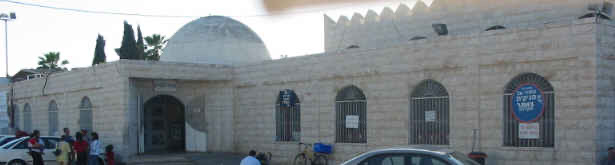
No freely licensed photograph from life was found. Image 1 is a photo of a poster, so it is marked not cleared for commercial use. A 1985 Dan Hadani photograph (CC BY 4.0) was rejected because it shows an identifiable private person who may be living.
Reported events
Miracles through prayer and blessing
Followers credit him with cures and other wonders through blessing. Thousands came to Netivot in his lifetime to ask for help.
widely credited with mystical powers
Reported by Followers, reported by the press and devotional biographers. Recorded Press from the 1980s; no dated case record found.
No specific miracle with named witnesses, date and record was traced. The press confirms the reputation, not any event. Bilu and Ben-Ari's abstract shows a scholarly reading of how the reputation was built and spread.
The reputation is confirmed by the press, but no case with a name, date and record is here. Scored as unnamed wonders, the same as other cards of that kind. Reviewer's judgment, not a calculation.
Sources: The Making of Modern Saints: Manufactured Charisma and the Abu-Hatseiras of Israel; Leader of North African Jews Calls for Talks with Arafat; Honoring A Sage's Yahrtzeit
Grave at Netivot as a place of answered prayer
His grave became a major pilgrimage site, with press estimates of 150,000 at the 1987 anniversary and 100,000 in 2013. Pilgrims come to ask for his intercession.
Reported by Press reports of pilgrim practice. Recorded From 1987.
Attendance figures are press estimates, and they show the devotion is real. No record of any particular answered prayer was examined.
Event scored: the pilgrimage, which the press reported at the time. No answered prayer is scored, because none was examined. Reviewer's judgment, not a calculation.
Sources: News Brief: memorial at Netivot; Honoring A Sage's Yahrtzeit
Soot likeness at Rehassim, 2004
An Orthodox family in Rehassim invited reporters to see a stain from Sabbath candle soot, which they said formed the outline of a famous portrait of him.
Reported by The family, reported by JTA. Recorded April 2004.
A dated, press-reported claim, but the report is a short brief and no examination is recorded. The claim concerns a resemblance, and the portrait was already everywhere in such homes.
Event scored: that a family showed reporters a soot stain they took for his likeness. The report is a same-week brief with no examination. Reviewer's judgment, not a calculation.
Disputes
- Bilu and Ben-Ari describe his charisma as in part 'manufactured' by media and institutions; followers would reject the term.
- After his death, family wealth drew scrutiny: the AP reported a fraud-squad inquiry into his grandson Elazar in the late 1990s, and a reported tax settlement. These concern descendants, not Baba Sali himself.
Still unknown
- Emigration dates conflict (1950, 1951, 1952, 1963, 1964). Israeli immigration files at the Israel State Archives may settle this.
- No primary record of a specific miracle was found. Hebrew press of January 1984 in the National Library of Israel's collections was not searched.
- A contemporary report of the 1984 funeral was not located, so the 100,000 figure rests on later accounts.
- His own writings and letters were not reached, beyond the signature.
Records


Sources
primary
contemporary
scholarly
reference