Regarded by Hasidic Jews as the founder of Hasidism. Whether he founded a movement at all is debated by historians.
A first-person letter and estate registers made in his lifetime survive, which is rare for a figure of this kind. Almost all the miracle stories, though, are graded C: first printed 55 years after his death.
Miedzyboz tax registers, from 1740, as reported by Rosman (written 20 years before their death)
Paper trail
Where they came from
Okopy, Ukraine (Okopy Swietej Trojcy, Kingdom of Poland), or possibly Moldavia (traditional)
Miedzyboz (Medzhybizh), Podolia, from about 1740
Old Jewish cemetery, Medzhybizh, Ukraine. Still visited; a modern ohel (grave shelter) stands there.
Shivchei HaBesht says his father Eliezer lived in Wallachia near the border, that he and his wife were old, and that he was taken captive. This comes only from hagiography. His wife is named only in legend. His brother-in-law Gershon of Kuty was a known scholar.
No human teacher is documented. A modern translation based on a longer text of his letter names Ahijah the Shilonite as his heavenly master; the short printed Hebrew read here does not. The turning point followers cite is his 'revelation' as a holy man, known only from Shivchei HaBesht.
His letter speaks of plague and of Jews martyred at Zaslav. Podolia in his lifetime lay close to Sabbatian and later Frankist agitation.
Clerks titled him kabbalist and ba'al shem in his lifetime, and the community housed him tax free. Disciples quoted him in print from 1780; the 1815 stories spread the legend widely.
Life
Israel ben Eliezer was born about 1700, on tradition in or near Okopy on the Polish border with Moldavia. Nearly everything about his youth comes from Shivchei HaBesht, printed 55 years after his death, and should be read as tradition.
From about 1740 until 1760 a holy man appears in the tax registers of Miedzyboz, a private town of the Czartoryski family. Rosman's work on these registers, as summarized by others, shows him in a house connected with the community and free of tax. That places him as a recognized practitioner with communal support, not as an outsider rebel.
His own voice survives in a letter to his brother-in-law Gershon of Kuty, then in the Land of Israel. It describes ascents of the soul in 1746 and 1749, and a meeting with the Messiah. Gershon never received it; it was printed in 1781.
He was a ba'al shem, a master of the divine name: a Jewish healer and writer of amulets, in the phrase of one register a doctor. The movement that claimed him grew mainly after his death, through disciples such as Yaakov Yosef of Polonne and through the printed stories.
כי בראש השנה שנת תק"ז עשיתי השבעת עליית הנשמה ("For on Rosh Hashanah of the year 5507 I performed the oath of the ascent of the soul"; translation by this archive)
Images
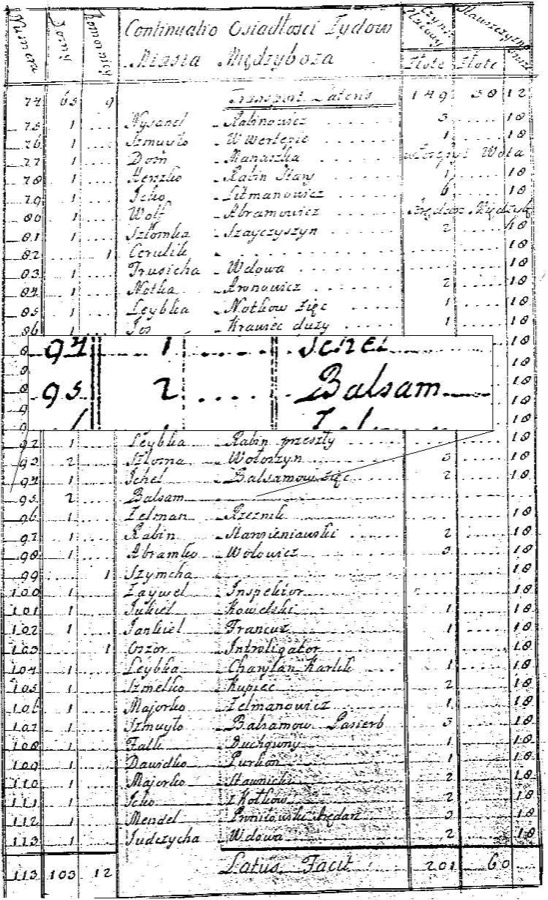
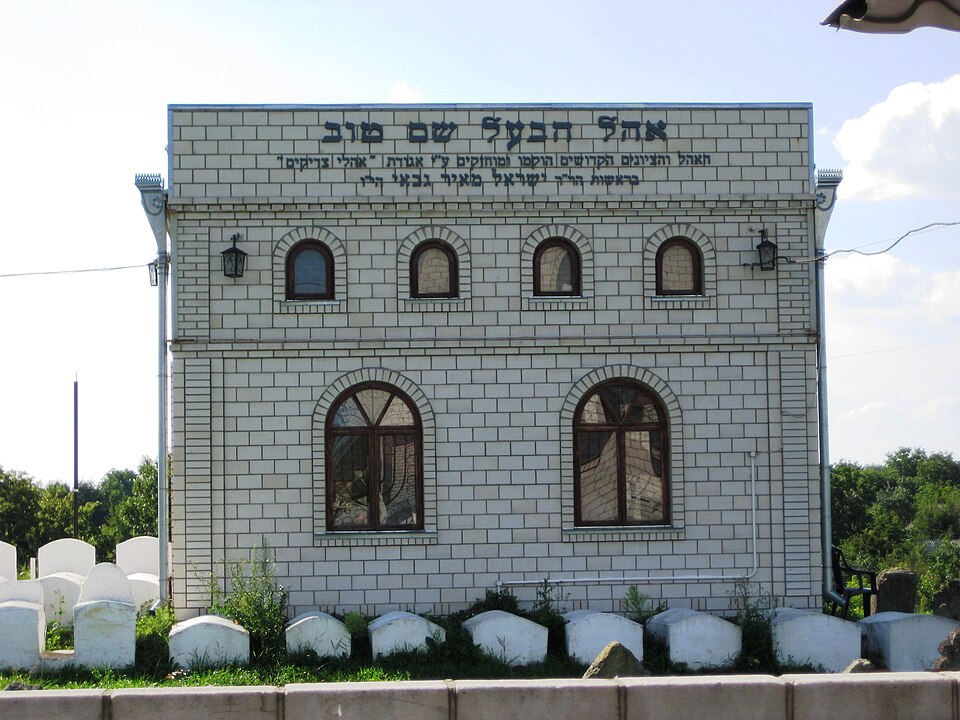
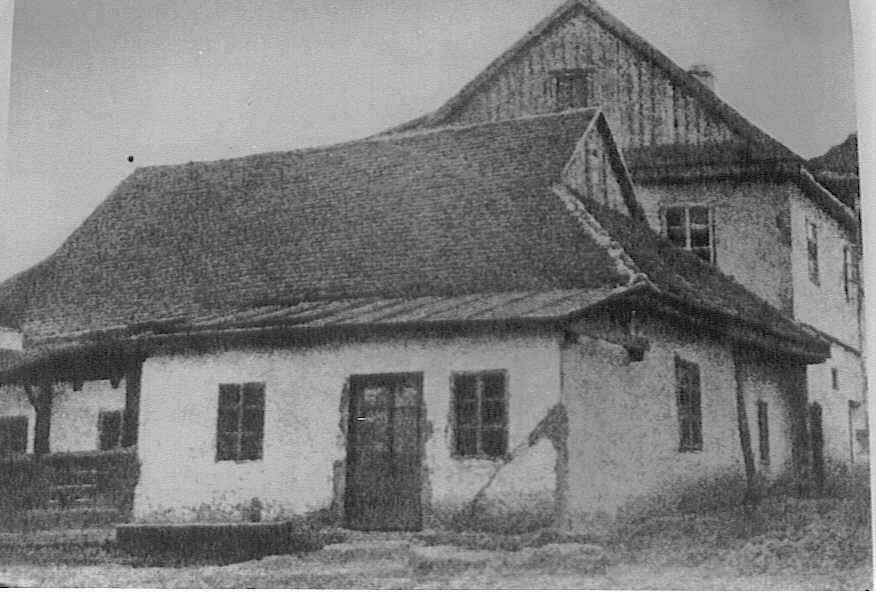
No portrait from life exists. The 1758 page is the closest thing to a direct trace of him.
Reported events
Soul ascent to the palace of the Messiah, Rosh Hashanah 5507 (1746)
He writes that on Rosh Hashanah he performed an oath for the ascent of the soul, rose through the heavens, and reached the palace of the Messiah. He asked when the Messiah would come and reports the answer: when his teaching is known and his wellsprings spread outward.
ויפוצו מעינותיך חוצה ("and your wellsprings spread outward"; translation by this archive)
Reported by The Baal Shem Tov himself, in a letter to his brother-in-law. Recorded About 1750-52 by the letter's own dating; printed 1781.
This is rare: a first-person mystical report by the person concerned. A historian can treat the letter as evidence of what he said he experienced, not of the experience's content. The printed text passed through Yaakov Yosef, and a longer text exists, so wording needs the critical studies.
Event scored: that he underwent this ascent as an experience and wrote of it. The letter is his own, but no autograph was found and the printed text was edited. Reviewer's judgment, not a calculation.
Sources: Letter of the Baal Shem Tov to Gershon of Kuty (the Holy Epistle), printed in Ben Porat Yosef; The Baal Shem Tov and the Messiah: A Reappraisal of the Baal Shem Tov's Letter to R. Gershon of Kutov; Igeret aliyat ha-neshamah (Epistle on the Ascent of the Soul), catalogue entry
Prayer against a heavenly accusation, Rosh Hashanah 5510 (1749)
He writes that he saw an accusation so great that permission was nearly given to destroy whole lands and communities. He says he offered his life and prayed to fall into God's hand rather than man's, and links this with the plague then spreading. The same letter mentions Jews martyred at Zaslav.
נפלה נא ביד ה' ואל נפלה בידי אדם ("let us fall into the hand of the Lord and not into the hand of man"; translation by this archive, the words echo 2 Samuel 24:14)
Reported by The Baal Shem Tov himself. Recorded About 1750-52.
The plague and the Zaslav affair are outside events he could know of, so they can be checked against Polish and Jewish records. The causal claim, that his prayer changed the decree, cannot be tested. No outside check was completed.
Event scored: the visionary experience he reports in his own letter. The plague and Zaslav references were not checked, and that his prayer changed anything is not scored. Reviewer's judgment, not a calculation.
Sources: Letter of the Baal Shem Tov to Gershon of Kuty (the Holy Epistle), printed in Ben Porat Yosef
The ba'al shem as healer
Polish registers title the occupant a kabbalist, a ba'al shem, and in 1760 a ba'al shem doctor. Shivchei HaBesht tells how he had a physician bleed a gravely ill man, R. Yosef, against the physician's fear and the crowd's muttering, and the patient recovered.
ואמר להרופא להקיז לו דם ("he told the physician to let his blood"; translation by this archive)
Reported by Estate clerks for the title; for the story, the rabbi of the compiler's community, retold by Dov Ber. Recorded Registers 1740-60; story printed 1815.
The clerks prove only that he was known as a practitioner, not that any cure worked. The title itself is strong outside evidence, from people with no devotion to him. The story reaches print 55 years later and describes ordinary medicine of the period, bloodletting, used with confidence.
Event scored: that he practised as a healer, which estate clerks with no devotion to him attest. No cure is established; the bloodletting story is printed 55 years later. Reviewer's judgment, not a calculation.
Sources: Tax list of the Jewish householders of Miedzyboz, 1758 (scan of a page); Shivchei HaBesht (In Praise of the Baal Shem Tov); Hasidism: Its Thought and Theology; Baal Shem Tov

Yom Kippur vision of the attack on the Oral Torah
Shivchei HaBesht says that on the eve of Yom Kippur he saw an accusation that the Oral Torah would be taken from Israel, wept and cried out in the synagogue, and later described reaching a gate with the prayers. The story ties this to the Sabbatian sect and a bishop of Kamenets who burned the Talmud and died on the road.
וזה הקטרוג היה מן הכת שבתי צבי ("this accusation came from the sect of Shabbetai Zevi"; translation by this archive)
Reported by Dov Ber of Linitz, from a named intermediary. Recorded Printed 1815.
The story pairs a religious experience with public events that were well known by the time of printing, so it may be hindsight. The bishop and the burning belong to Polish and church history and should be checked against those records. That check was not done.
Printed 55 years later, through a named intermediary, and the public events were known by then. Hindsight is the leading candidate, and the outside check was not done. Reviewer's judgment, not a calculation.
Disputes
- Rosman argues, as reviewers summarize him, that the Besht was an established figure supported by the community, against the older picture of a rebel who founded a popular revolt.
- Scholars debate how much of the letter's text is authentic, and how the short printed version relates to longer manuscript versions.
- Whether he founded a movement, or later disciples built one around his name, remains disputed.
Still unknown
- The exact Czartoryski shelfmarks for the 1740-1760 registers were not confirmed. Rosman's notes and the Czartoryski Library in Krakow should give them.
- Secondary descriptions disagree on the house: the 1758 scan shows no. 95, while one description seen in a search summary gives no. 93 for 1760. Numbering may have changed.
- Date and place of birth are unsettled.
- House 94 on the 1758 page appears to read as Balsam's son-in-law; this reading needs a Polish palaeographer.
Records
Sources
primary
hagiography
scholarly
reference