Revered by the Thai forest tradition as an arahant. In November 2019 the UNESCO General Conference noted the anniversary of his birth among those for celebration in 2020 and 2021.
Sermon notes were printed with his permission in his lifetime, but almost everything about wonders comes from disciples writing within about a generation.
Muttodaya (A Heart Released), sermon notes of 1944-45 (written 5 years before their death)
Paper trail
Where they came from
Ban Khambong, Khong Chiam district (Boowa), Ubon Ratchathani, Thailand (documented)
Forests of Isan, northern Thailand, Laos and Burma
Cremated at Wat Pa Sutthawat, Sakon Nakhon, January 1950. Relics are kept there and elsewhere; travel guides report a stupa and museum that receive visitors.
Village farmers. Eldest of eight children of Khamduang and Jun Kaenkaew. No religious lineage recorded.
Novice at fifteen. Ordained 1893 at Wat Liap under Ariyakawi; trained under Ajaan Sao.
State reform of the Sangha and suspicion of wandering monks, per Tiyavanich and Taylor as summarised in reviews; We did not read them.
Disciples from the 1920s; Chao Khun Upali praised his sermon in Chiang Mai. The biography by Boowa spread his fame in Thailand.
Life
Mun was born in the village of Ban Khambong in Ubon Ratchathani, the eldest of eight, to Khamduang and Jun of the Kaenkaew family. He became a novice at fifteen and left at his father's wish. He was a skilled performer of maw lam, a village form of extempore rhyming contest. On 12 June 1893 he was ordained at Wat Liap in Ubon and joined the meditation of Ajaan Sao Kantasilo.
For decades he wandered through the forests of Thailand, Laos and Burma. Wikipedia records a stay in Sarika Cave and teaching in Bangkok. Boowa cites a report that he stayed in the north from 1929 to 1940. Ajaan Lee Dhammadharo, who lived with him at Wat Chedi Luang in Chiang Mai, tells how a letter came making him preceptor and abbot, and how he left at once.
He returned to the northeast about 1940, and disciples gathered at Ban Nong Pheu. Fatally ill, he asked to be carried to Sakon Nakhon so that animals would not be killed for his funeral at Ban Nong Pheu, and he died at Wat Suddhavasa (Wat Pa Sutthawat) on 11 November 1949. His cremation in January 1950 drew vast crowds.
Images
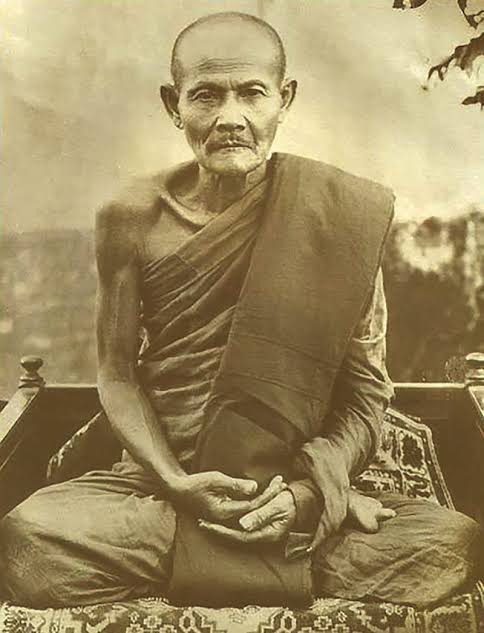
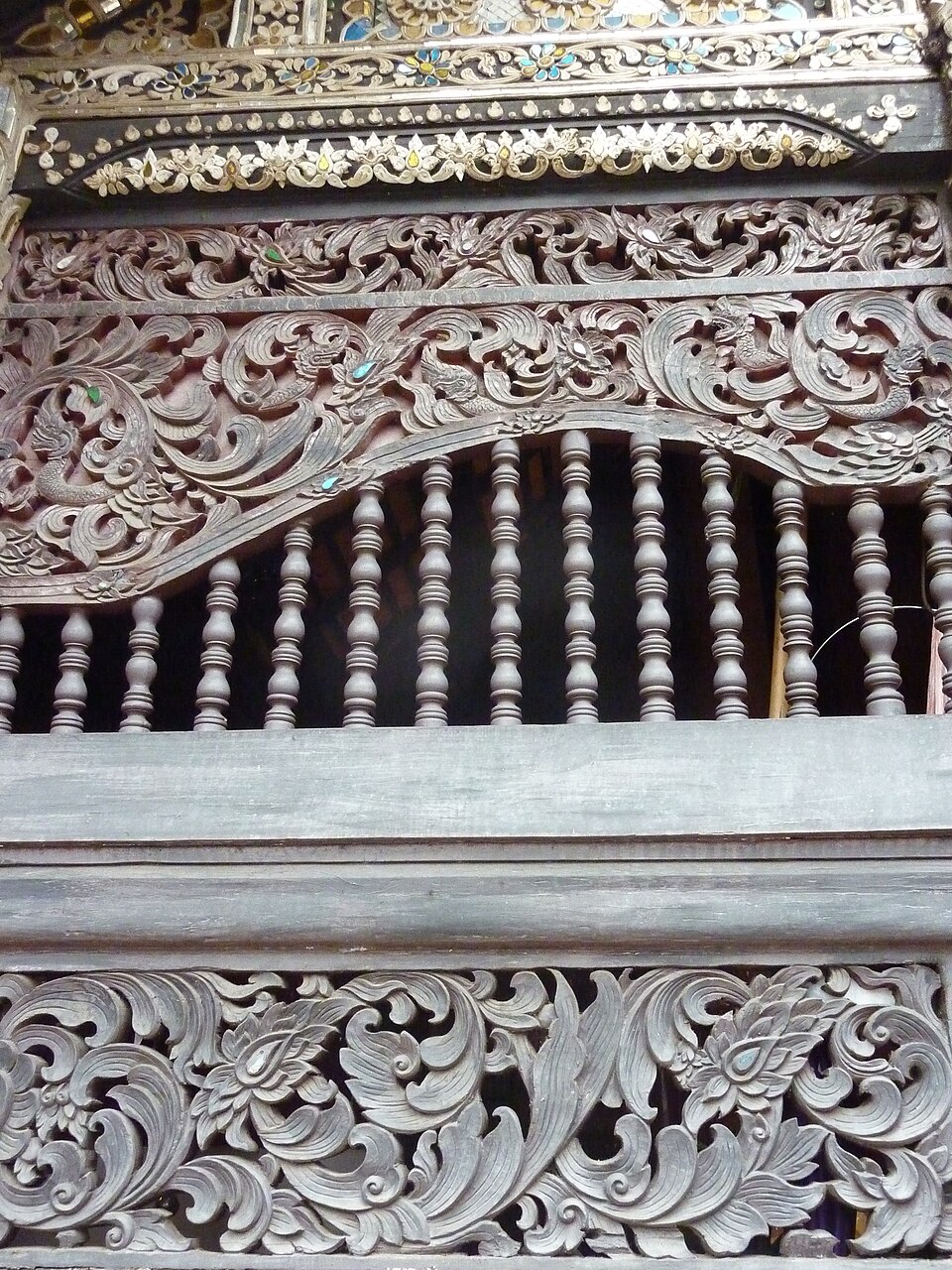
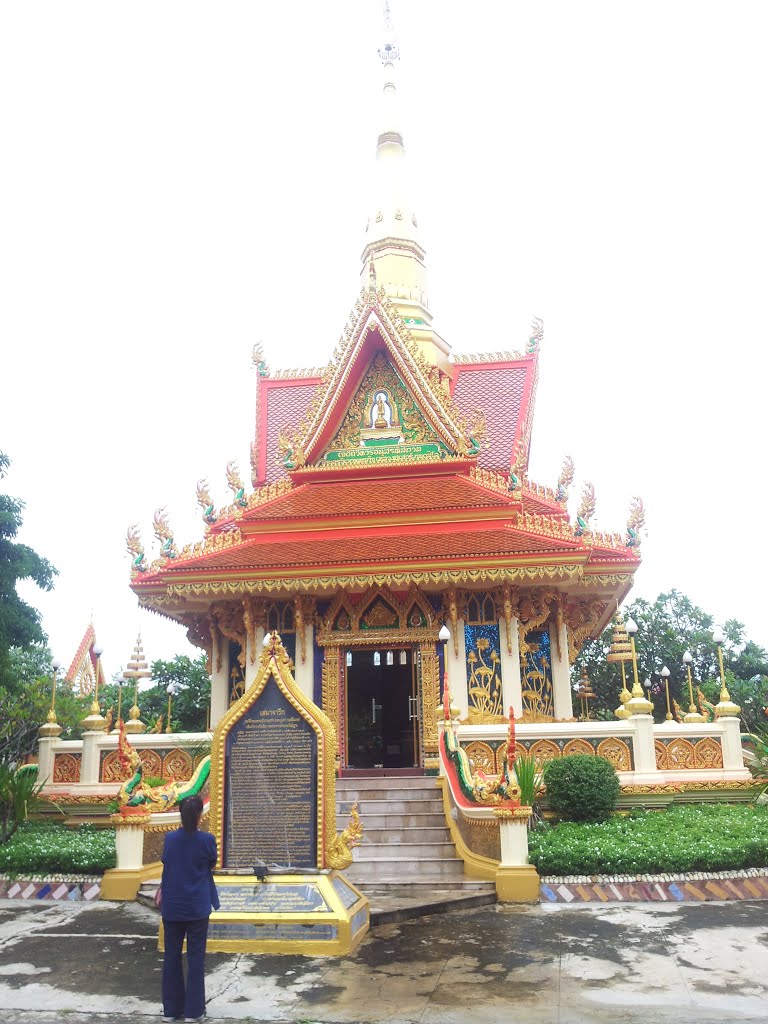
Image 1 is small. Check its identity against a Thai source, because photos of Mun are often confused with disciples.
Reported events
Awakening in the forest
His disciples hold that he reached full awakening in a remote cave in the north, and Wikipedia reports his words to a disciple that he had finished his work.
Reported by Maha Boowa, disciple, retelling what Mun told his monks; other forest tradition sources.. Recorded Boowa's Thai biography, 1971 by one citation..
Sources differ on place, Sarika or Dok Kham. Awakening is a claim about inner states that history cannot check. Thanissaro says students thought the recorded sermons fell short of the originals.
Event scored: that he told his monks his work was finished. It comes through a disciple writing decades later, and the attainment itself is an inner state no record can reach. Reviewer's judgment, not a calculation.
Sources: Venerable Ācariya Mun Bhūridatta Thera: A Spiritual Biography; Ajahn Mun
The dream at Wat Liap
Early in his practice he dreamed of crossing a jungle and a vast field to a fallen jāti tree and climbing it. Boowa treats this as a prophecy of his path.
Reported by Mun to his disciples, reported by Boowa.. Recorded After 1949..
A dream recalled and told by Mun, and printed decades later. Its meaning is given after the fact.
A dream he told, printed decades later, with its meaning supplied by the biographer. The dream is ordinary; that it foretold his path is hindsight. Reviewer's judgment, not a calculation.
Sources: Venerable Ācariya Mun Bhūridatta Thera: A Spiritual Biography
Teaching devas and nagas
Boowa reports that Mun told his disciples of devas, nagas and spirits coming at night to hear Dhamma. Ajaan Lee says Mun told him a spirit in a Lamphun mountain would not harm him.
Reported by Mun, as recalled by Boowa and by Ajaan Lee.. Recorded Lee dictated his autobiography about 1960; Boowa about 1971..
Two disciples, writing separately, report that he spoke this way, so that he taught such things is well supported. Thai forest monks treat such perception as a by-product of meditation.
Event scored: that he reported visions of devas and nagas, as experiences. Two disciples, writing separately, agree that he spoke this way. Reviewer's judgment, not a calculation.
Sources: Venerable Ācariya Mun Bhūridatta Thera: A Spiritual Biography; The Autobiography of Phra Ajaan Lee
Reading his monks' thoughts
Boowa says that Mun knew when his monks' thoughts strayed, and rebuked them, which kept them in fear and attention.
Reported by Maha Boowa, who lived with him, and fellow monks.. Recorded About 1971..
Boowa writes as a participant. A teacher who has lived closely with students reads faces and behaviour, and no test was made.
A participant's memory, written about twenty years on, with no test made. A close teacher can read faces, and the only source is a devoted biographer. Reviewer's judgment, not a calculation.
Sources: Venerable Ācariya Mun Bhūridatta Thera: A Spiritual Biography
Bones turned to crystal relics
Bone fragments gathered after the cremation are said to have turned into crystal-like relics, and Boowa tells of a government official whose two relics became three in a snuff bottle in one day.
transformed into crystal-like relics
Reported by Maha Boowa; the official, unnamed; a senior monk.. Recorded About 1971..
Relics are on display, so something physical exists. No independent analysis was found by me. The multiplying relic rests on an unnamed witness and a monk's memory of how many he gave. Boowa regarded the transformation as proof of arahantship. He also addresses readers who want scientific proof, and leaves them to ponder the cause.
Relics exist and are displayed, which is the solid part. Scored is the change from bone to crystal and the relic that multiplied, which rest on an unnamed official and were never tested. Reviewer's judgment, not a calculation.
Sources: Venerable Ācariya Mun Bhūridatta Thera: A Spiritual Biography
Disputes
- Secondary accounts say the Thai Sangha official Tisso Uan held Mun unqualified to teach, even after his death, and worked against wandering monks. We read this only in a search summary of a review of Taylor; check Taylor, Forest Monks and the Nation-State, and Tiyavanich, Forest Recollections.
- Boowa's biography is a disciple's work, and it reports what Mun told his students about devas and past lives. It should be read as devotional.
- Several photographs on the web are misidentified. A Commons file warns that Luang Pu Chob and others are often mistaken for Mun.
- Dates for Chiang Mai vary: 1927, 1928 or 1929 for arrival, and sources disagree on whether he held the abbotship for one rains or refused it. Ajaan Lee has him leave when the offer came.
Still unknown
- The ordination register of Wat Liap and any re-ordination record: Thai sources needed.
- The short biographical sketch printed for his cremation in 1950, the earliest biography. Boowa mentions it, and a copy should be sought.
- The manuscript of the Ballad, with parts faded and altered by a later hand, per Thanissaro.
- Official Sangha correspondence of the Dhammayut order in Bangkok and Ubon.
Records
Sources
primary
contemporary
hagiography
reference