Founder of the Tijaniyya, among the largest Sufi orders in Africa. Followers hold him to be the Seal of Saints and Hidden Pole, claims rejected by many other Muslims.
His teachings were recorded by close disciples in his lifetime, and one copy stayed in his possession. All of it is insider testimony, so the grade applies to what he said, not to the events.
Muhammad b. al-Mashri, Rawd al-muhibb, about 1792 (per Wright) (written 23 years before their death)
Paper trail
Where they came from
Ayn Madi (Aïn Madhi), Laghouat province, Algeria (documented)
Abu Samghun in the Algerian Sahara, then Fez, Morocco
Zawiya of Sidi Ahmad al-Tijani, Fez, Morocco; a major pilgrimage site, especially for West African Tijanis
Scholarly family of Ayn Madi claiming descent from the Prophet (al-Hasani). French writers say his forebears led the town's religious house.
Studied at Ayn Madi and Fez. Initiated into Shadhili, Qadiri and Khalwati lines. Key teachers named by Wright: Mahmud al-Kurdi in Cairo, Muhammad al-Samman in Medina, and an Indian master called al-Hindi in Mecca. The turning point is the waking vision of 1782.
Ottoman tax pressure on the oases from 1785. The hostile chronicler al-Zayani says he was jailed and expelled by the Bey, which Moroccan historian Ahmad al-Azmi and Wright doubt.
Disciples at Abu Samghun and Fez wrote down his teachings in his lifetime, and royal favour at Fez gave him standing. Disciples and his own statements carried the rank of Seal of Saints.
Life
Ahmad al-Tijani was born at the oasis of Ayn Madi in what is now southwestern Algeria and left at about twenty-one after the usual Quranic and legal training. Zachary Wright traces his travels to Fez, Tlemcen, Tuwat and Tunis, his initiations into Shadhili, Qadiri and Khalwati lines, and his pilgrimage of 1774, when he met Mahmud al-Kurdi in Cairo and Muhammad al-Samman in Medina.
Around 1782, at the oasis of Abu Samghun, Tijani sources say the Prophet appeared to him awake and gave him his own path. He was forty-six. The Ottomans in Algiers imposed tribute on Ayn Madi in 1785 and sent forces to collect it from 1788, the pressured setting of his later hostility to the Turks of Algiers.
In 1798 he settled at Fez, where Sultan Mawlay Sulayman gave him a house and a place on his council of scholars. That same year his disciple Ali Harazim al-Barrada completed the Jawahir al-maani, which he kept and read. He died at Fez in 1815 and is buried in his zawiya there.
After his death the order passed to his sons at Ayn Madi and to the Temacin branch. French officials in Algeria valued the order for its stand against the Emir Abd al-Qadir, who besieged Ayn Madi in 1838. In West Africa, through Umar Tal and later Ibrahim Niasse, it became a mass movement.
Images
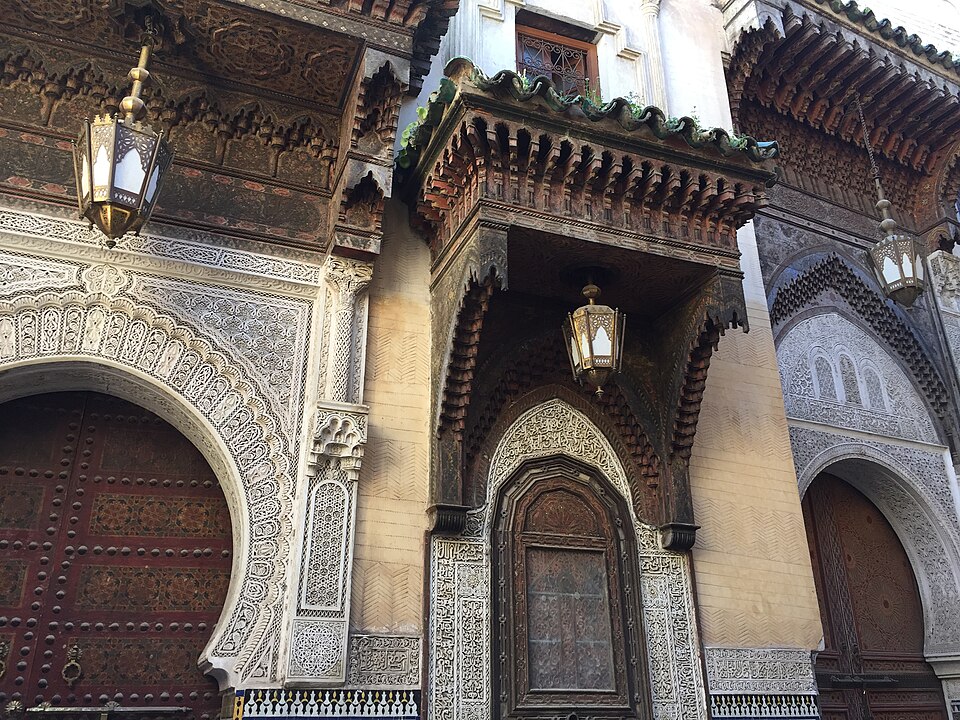
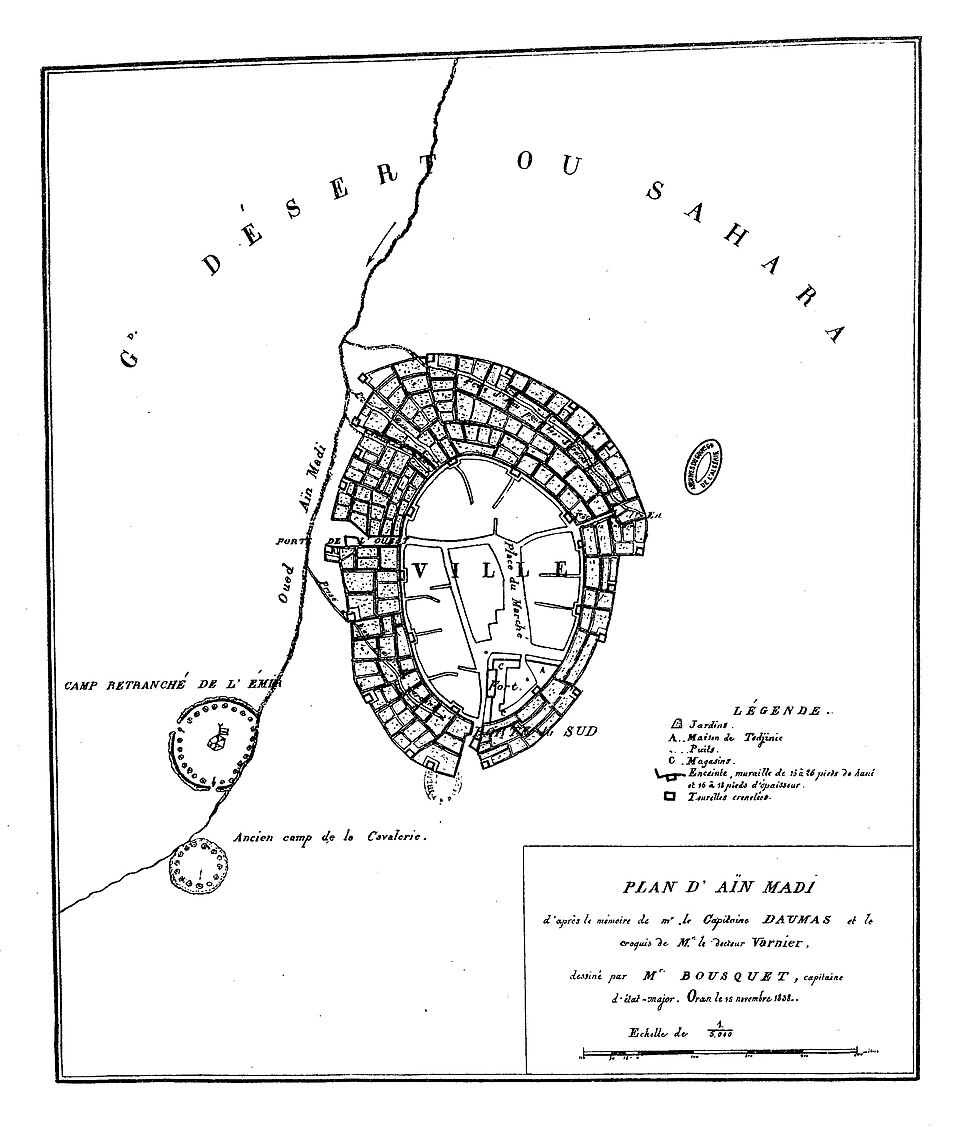
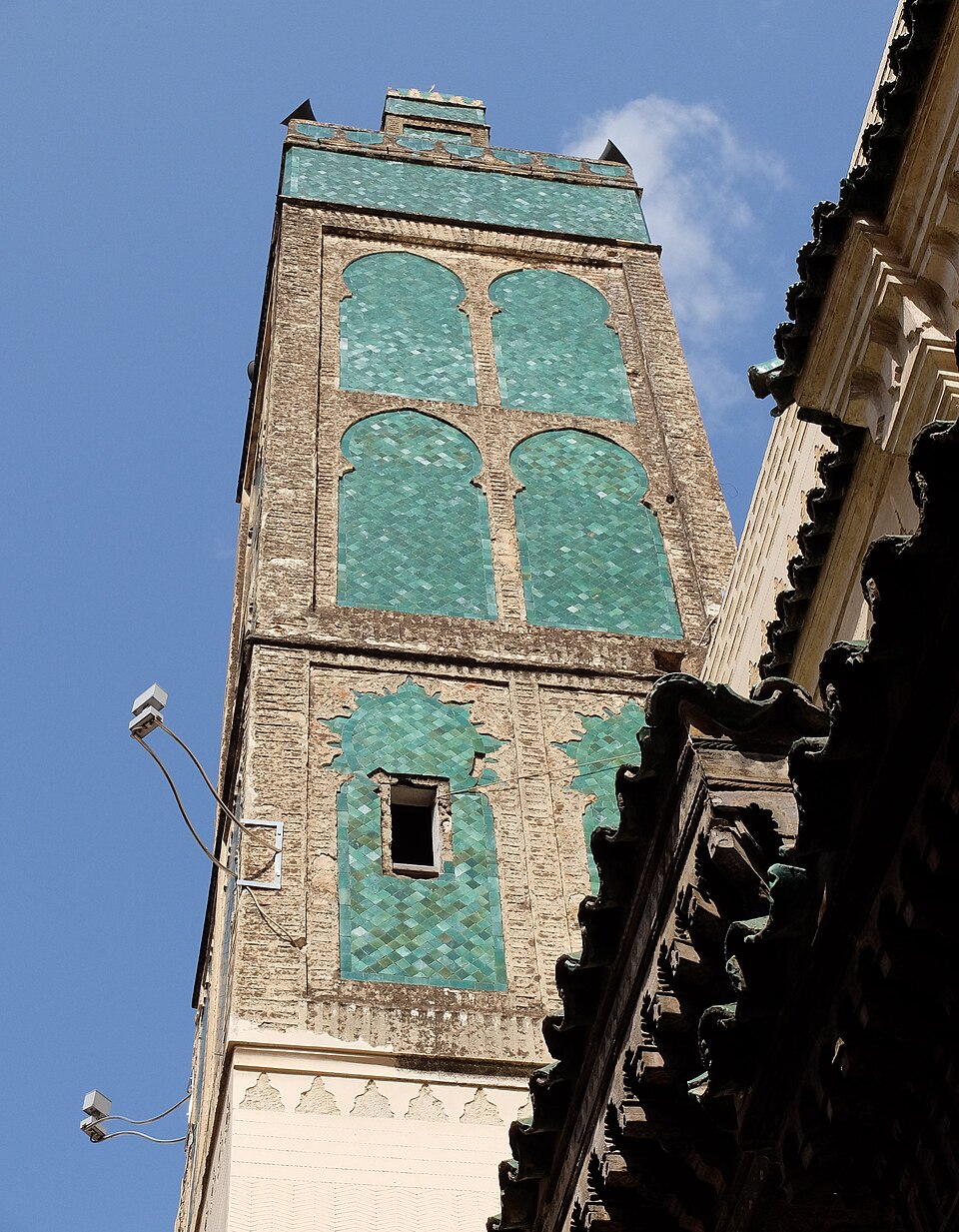
No portrait from life is known. Devotional portraits exist but were not used. Nothing here depicts the Prophet.
Reported events
Waking encounter with the Prophet, 1782
At Abu Samghun in 1782, Tijani sources say, the Prophet Muhammad appeared to him awake, gave him his Muhammadan Path, and from then on taught him directly.
in a waking state, not dreaming
Reported by Al-Tijani himself, through disciples Ali Harazim al-Barrada and Muhammad b. al-Mashri. Recorded Ibn al-Mashri's Rawd al-muhibb about 1792; Harazim's Jawahir al-maani, completed 1798.
That he made the claim in his lifetime is secure, since the disciples' texts date from within two decades and he kept a copy. The experience itself had no other witness and cannot be tested. Wright places it in an established Sufi discussion of waking vision. The nineteenth-century scholar al-Shinqiti held such waking physical contact to be impossible.
Event scored: that he had a waking vision, as an experience. Disciples recorded his claim within about two decades, and no one else shared it. Known here only through a summary, so lowered by about 10. Reviewer's judgment, not a calculation.
Sources: Realizing Islam: The Tijaniyya in North Africa and the Eighteenth-Century Muslim World; The Objection to the Claim of Meeting the Prophet Muhammad in a State of Awakedness According to Muhammad al-Shinqiti
Seal of Saints and the guarantee to followers
He is reported to have claimed the rank of Seal of Muhammadan Sainthood and Hidden Pole, and that the stamp of his path stands over all others until the end of time.
Reported by Harazim, Ibn al-Mashri and later Tijani scholars. Recorded From about 1792 to 1804 in disciples' collections.
The claim is well attested as a teaching and has been the main ground for attacks on the order. Wright argues that critics rely on selective reading and that Tijani sources themselves warn against crude versions. Reviewers of Wright note that his sources are mostly from inside the tradition. It is a doctrinal claim that history cannot test.
Event scored: that he taught this rank for himself, which disciples' collections attest in his lifetime. Whether the rank is real is a doctrine that history cannot test. Known here only through a summary, so lowered by about 10. Reviewer's judgment, not a calculation.
Sources: Realizing Islam: The Tijaniyya in North Africa and the Eighteenth-Century Muslim World
Prayer against the Turks of Algiers, 1805
When the Ottoman authorities executed his disciple Ahmad al-Baghdadi in Tlemcen in 1805, he is reported to have prayed that God close Algeria to them as Andalusia had been closed. Tijanis later read the French conquest of 1830 as the answer.
Reported by Tijani sources, as summarized by Wright. Recorded Written in Tijani collections; the exact first date was not traced here.
The prayer may well have been spoken. Its reading as fulfilled prophecy is hindsight, and the fall of the Regency needs no special explanation. It also shows how Tijanis could explain later cooperation with France.
Event scored: a prayer that foretold the fall of Ottoman Algiers. The prayer may have been spoken, but the first written date is untraced and the fulfilment is a reading made after 1830. Known here only through a summary, so lowered by about 10. Reviewer's judgment, not a calculation.
Sources: Realizing Islam: The Tijaniyya in North Africa and the Eighteenth-Century Muslim World
Reported miracles in the Jawahir and the French view
Tijani texts credit him with wonders, and French officials writing in 1897 said his followers exhausted themselves listing his miracles and calling him a wonder worker.
L'histoire du cheikh Sid Ahmed-et-Tidjani est intarissable de louanges ; ses adeptes n'ont pas de qualificatifs assez expressifs pour exalter ses vertus, rappeler ses miracles, énumérer ses actions.
Reported by Disciples; reported at second hand by Octave Depont and Xavier Coppolani. Recorded From 1798; French summary 1897.
No single miracle was traced here to a named witness with a date, so none is entered as its own claim. The specific list in the Jawahir needs reading in Arabic. Wright reports a modern scholar's argument that miracles were used to raise his rank above disciples, and he rejects that as too crude.
No wonder here reaches a named witness with a date, so only the reputation is secure. The same score is given to every card with unnamed wonders. Reviewer's judgment, not a calculation.
Sources: Realizing Islam: The Tijaniyya in North Africa and the Eighteenth-Century Muslim World; Les confréries religieuses musulmanes
Disputes
- Abun-Nasr called Harazim's borrowing from the Kitab al-maqsad plagiarism, and Salafi critics in early twentieth-century Morocco repeated it. Wright counts the borrowing at about 2.5 pages of formula in some 680 pages.
- The Moroccan historian al-Zayani (d. 1833) says he was accused of alchemy, gathered the dregs of the Berbers and Arabs, and was jailed and expelled by the Bey. Wright, citing Ahmad al-Azmi, doubts this because French and Algerian accounts of the time are silent.
- Critics reject the waking vision. A study of the scholar Muhammad al-Shinqiti reports his argument that neither scripture nor reason can support it.
- Abun-Nasr accused the order of colonial collaboration. French writers themselves credited Tijanis with serving France after 1838. Wright calls Abun-Nasr's framework dated.
- Wright, who thanks Tijani shaykhs as his mentors in his acknowledgments, is the fullest modern source. A reviewer notes the study would gain from more outside perspectives.
Still unknown
- No autograph writing by al-Tijani is confirmed here. Wright reports four manuscripts of the Jawahir in Harazim's hand, at Ayn Madi, Tlemcen (two) and Kaolack.
- Whether the Ottoman Bey ever imprisoned him remains open. Ottoman Algerian records in the Archives nationales d'Algérie and Moroccan royal correspondence (Bibliothèque royale, Rabat) might answer it.
- The Arabic text of Jawahir al-maani was not read directly, and his exact date of death was not confirmed in a primary source.
- Harazim's death date differs between sources: Wright gives 1804, and Wikipedia cites 1797.
Records
Sources
primary
contemporary
scholarly